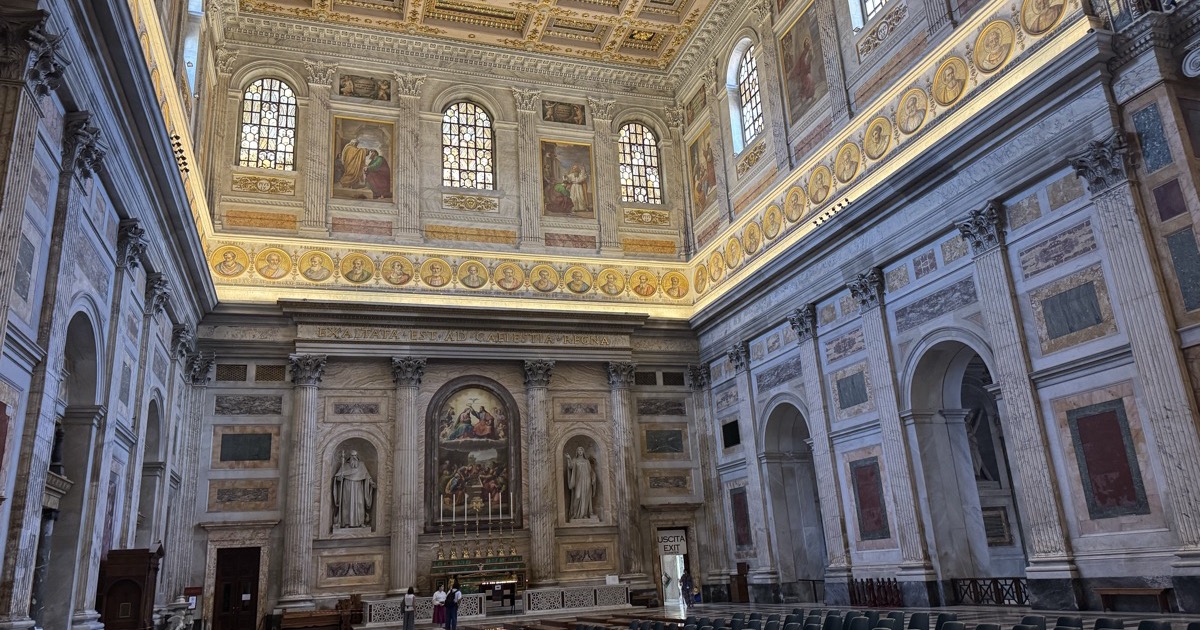
The Mamertine Prison: Where Peter and Paul Were Held
The Mamertine Prison is a place you don’t expect. At least, it wasn’t what I expected — not until I stood there and saw it for myself.
I had read about this prison. About the men it once held: war-leaders and enemies of the empire, conspirators, fighters — and, according to tradition, the apostles Peter and Paul. And yet, almost without realising it, when I pictured a “prison” my mind drifted to something else: something vast and imposing, worthy of the figures who passed through it over the centuries. The Mamertine is not that. The first surprise is simply where it is.
A place you have to look for
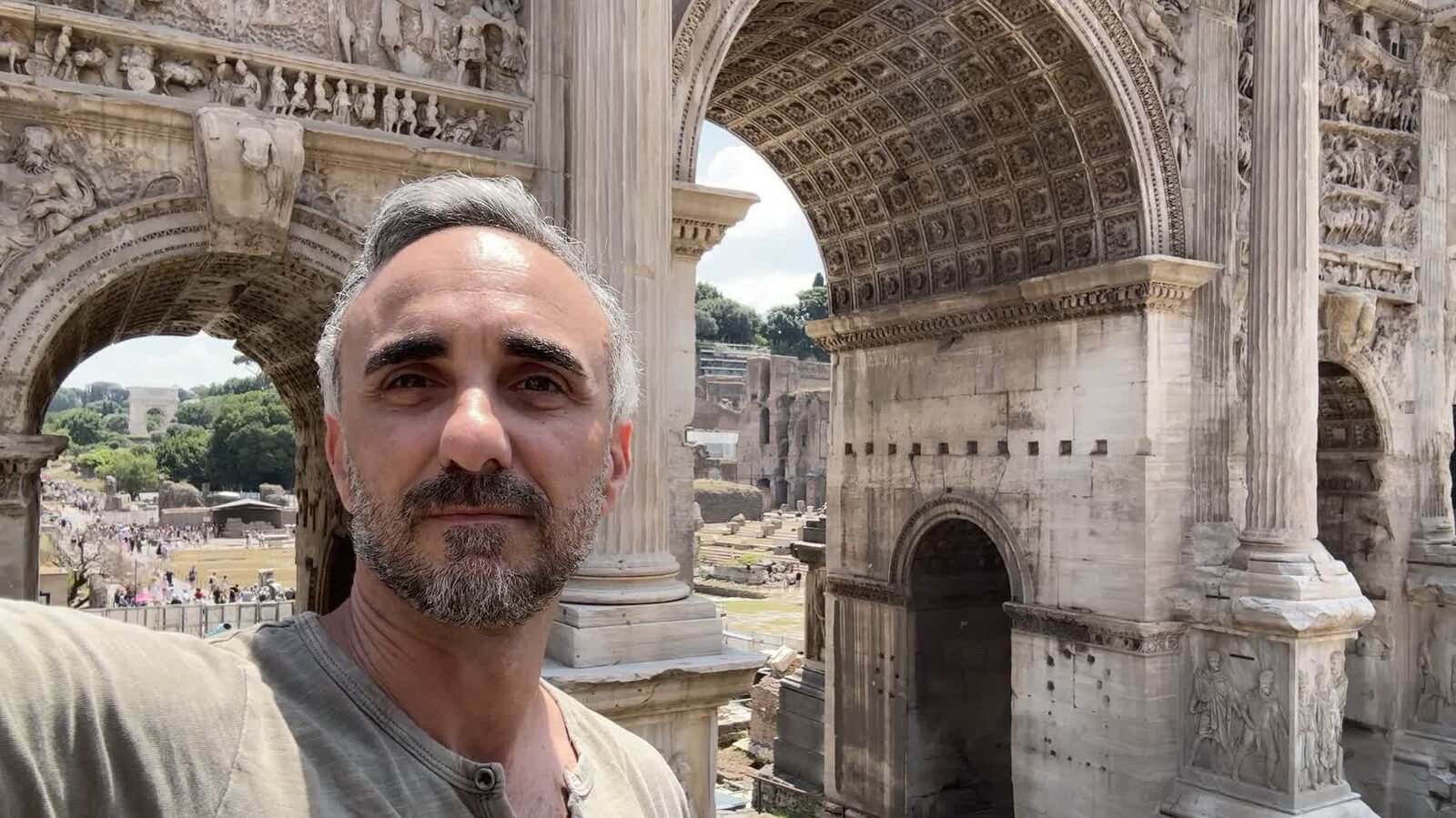
It sits in the most charged spot in all of Rome — on Via dei Fori Imperiali, wedged between the Roman Forum and the Capitoline Hill, exactly in the middle. You leave the main avenue for a moment, turn down a small side lane, and it takes you there. Even arriving is moving: as you walk, the Arch of Septimius Severus grows closer, and by the time you reach the entrance it stands right beside you, below you, near enough to touch. The view over the Forum alone is worth the walk.
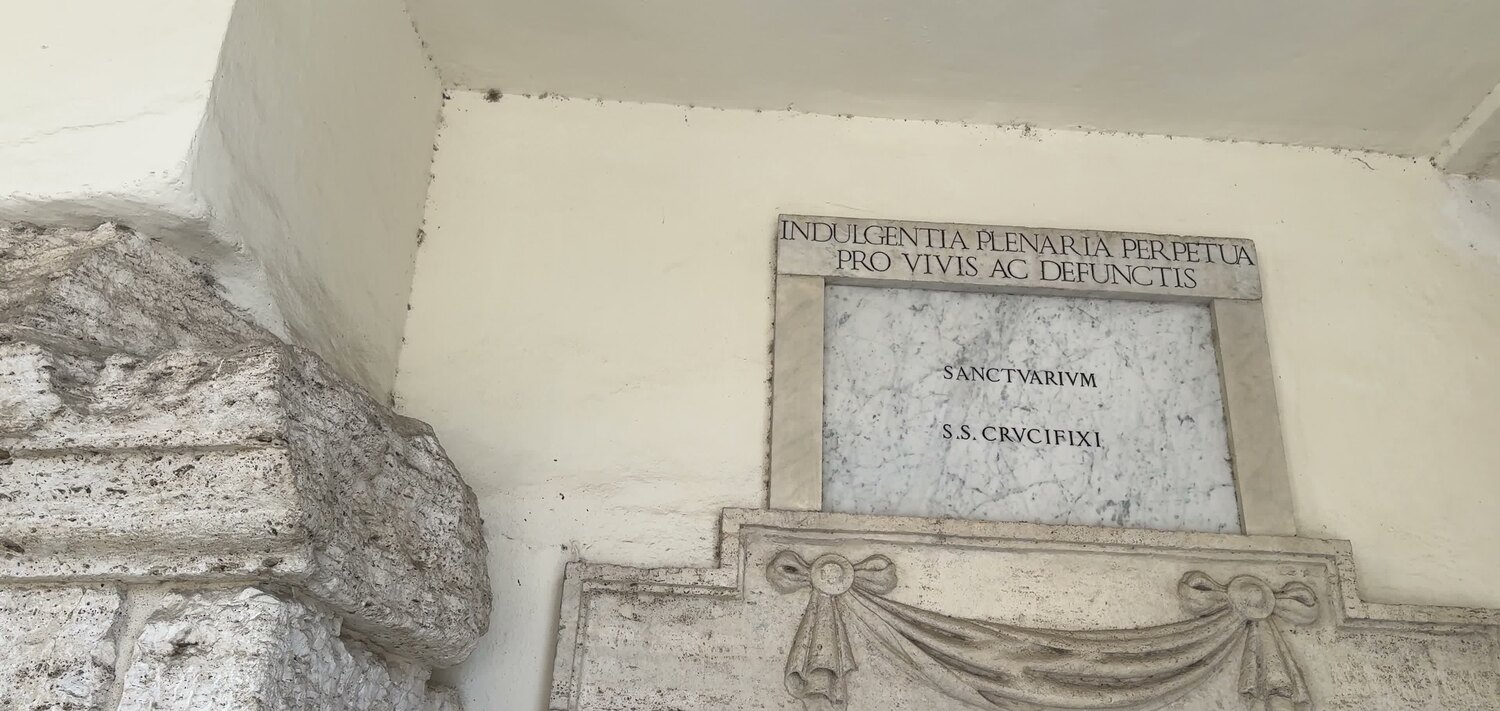
And then you remember. The prison. It takes a second — because in that setting, surrounded by so much beauty, the views, the Capitol on one side and the great arch so close, your mind is pulled away. For a moment you forget. Ah, yes — the prison. It’s right there: a plain entrance, not large. In the end that’s what it is — a place of suffering. The Romans did not imprison people as a punishment: the carcer held the accused while they awaited trial, and the condemned in the short hours before they died. No one “served a sentence” here — you left it acquitted, exiled, or dead. The lower cell, the Tullianum, was the place of execution itself. And yet the prison sits there, in the middle of all that beauty, its inscription unmistakable.
Who passed through here
You step in, and you can buy your ticket at once. The desk is to the right — but to the left there is already another space: a small chapel, with pews for services. For groups travelling with their own pastor or priest, Mass can be arranged here, in the very place the tradition remembers. To the right, past the ticket desk, a small exhibition room — interesting, though by now the pull to see the prison itself is strong, and instinctively you look for the way down.
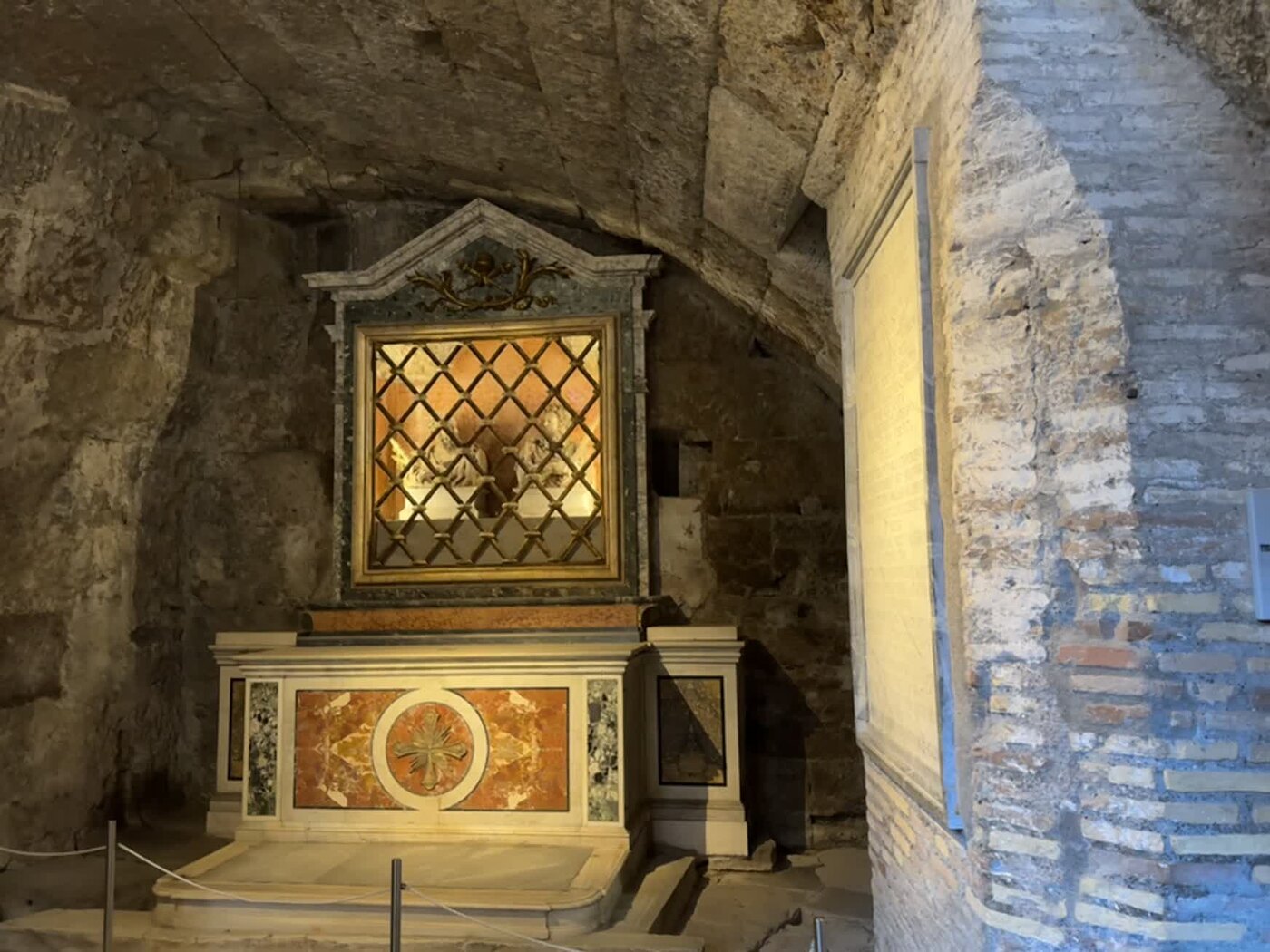
Because it is down. Below. You descend two levels. A stair takes you to the first chamber, where many visitors stop a moment in memory of the apostles. For centuries this ground held the empire’s most dangerous enemies — Jugurtha, king of Numidia, left to starve; Vercingetorix, chieftain of the Gauls, executed after Caesar’s triumph; the conspirators of Catiline, strangled in the dark. The men Rome most feared ended here. And by that same logic — because at the time they too were judged dangerous — tradition places the founders of the Church, Peter and Paul, in this same cell.
Down into the dark
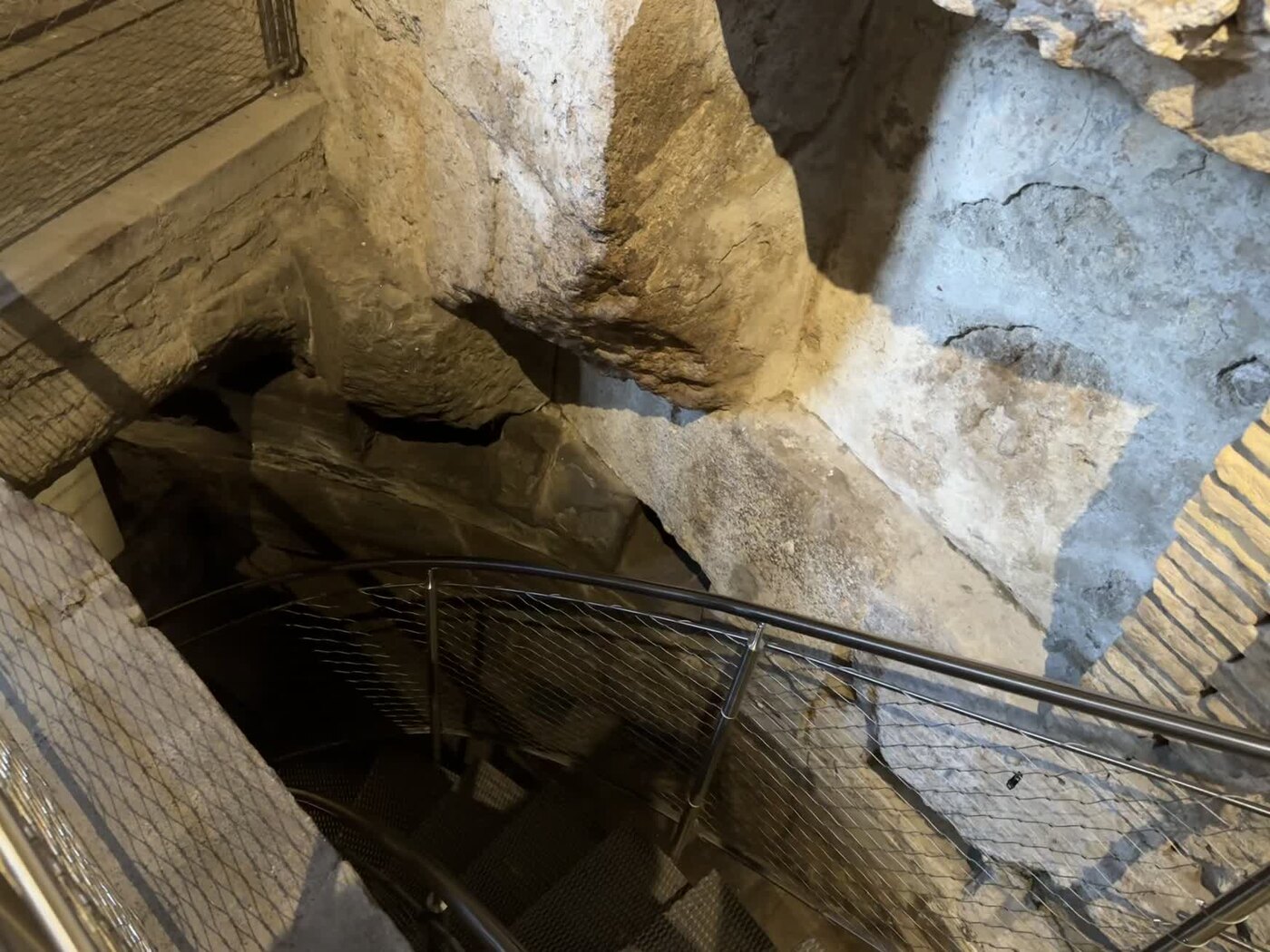
The tension of the place is palpable. The suffering of two thousand years of captivity mixes with the strange holiness of a room that, by tradition, held two fathers of the faith at once. Then you go lower still. A dark chamber, where you keep to a walkway, and overhead you can still see the round opening in the vault — the original mouth of the cell, through which the condemned were once lowered into the black. Here tradition holds that Peter made a spring rise from the floor, and with its water baptised his own jailers, Processus and Martinian, who would later die for the faith they found in that cell.
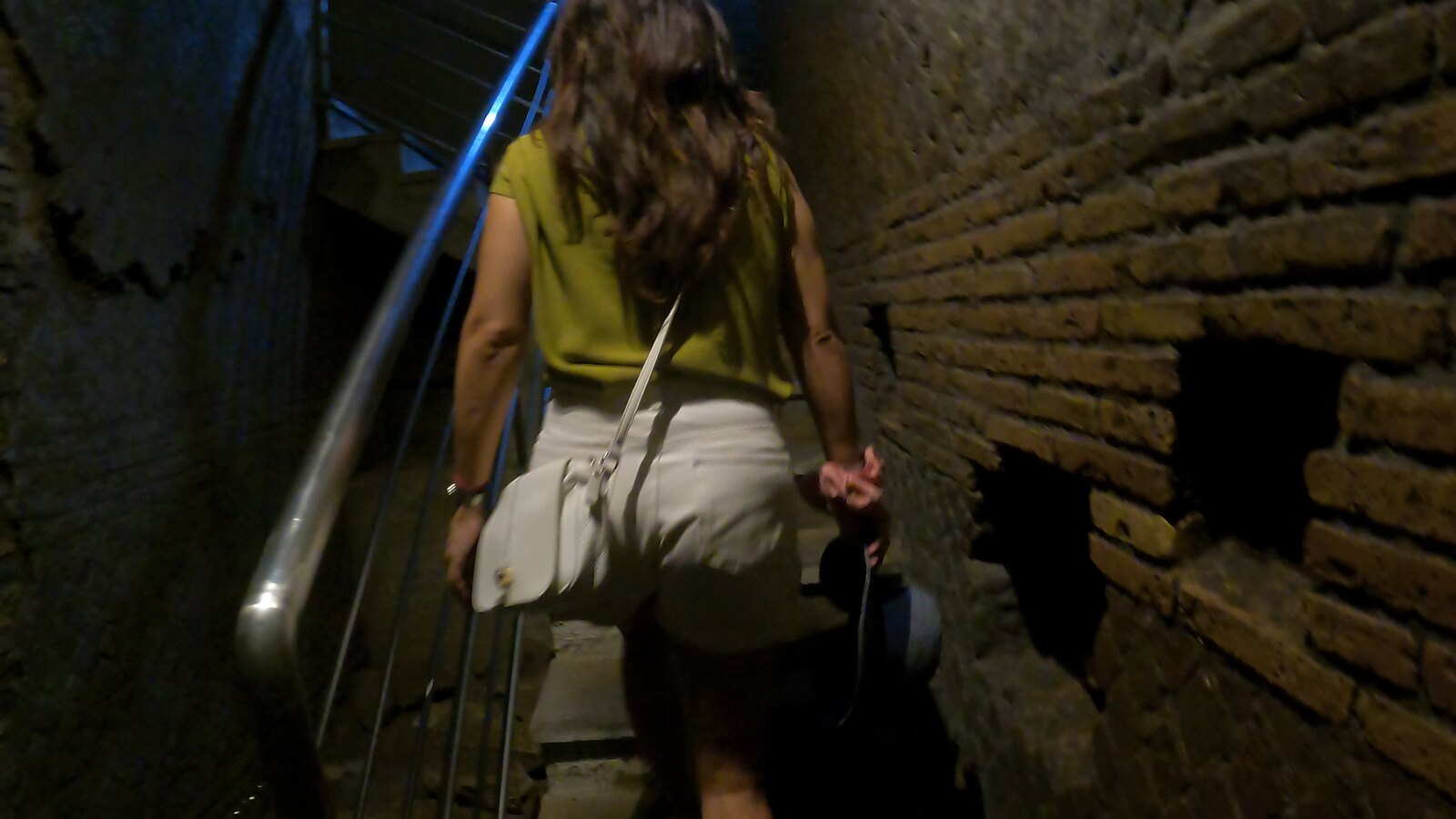
It is completely dark. You are two levels under the earth, in what feels like a cave more than two thousand years old, whose stones watched the men who changed history pass through.
What this place asks of you
Then you climb back up. You retrace your steps, and as you rise — as you step back out — you feel you are returning not only to the street above, but to your own century. You have the sense of coming back from a small journey through time.
A place where beauty does not count — here it was only ever life, or death.
This is what the Mamertine does to you. It is crushed by the beauty of everything around it, so that you almost can’t find it. And when you do, you have to go down to meet it. And once you’re down, to the hurried eye there is “nothing” there — nothing for anyone who doesn’t mean to stop. But if you go down with the right spirit, you feel it: this is a special place, one that has kept its whole character. A place where beauty does not count. Where art does not count. Here it was only ever life or death, for everyone who passed through.
And that is the whole point of why we travel the way we do. You already know Peter and Paul were in Rome. What the Mamertine offers is not a monument to photograph, but the chance to understand the world they walked into — and to recognise, standing in that dark, that the thread running from this cell to the faith you carry today was never broken. Pilgrimage, not tourism: prepare your heart, not just your suitcase. This is what we do with Christian Roots Journeys.
The empire buried its most dangerous enemies in this hole in the rock, certain it had silenced them. Two of them were a fisherman and a former persecutor — men Rome feared for a faith it never understood. Twenty centuries later, the empire lies in ruins in the sunlight above, and those two prisoners are remembered in every corner of the earth. The Mamertine doesn’t tell you this. It simply lets you stand where it happened — and, if you came prepared, understand it.
Whether you are a pastor bringing your congregation or a traveller coming on your own, we build the whole journey around understanding — the history, the context, the faith — so that places like the Mamertine open up to you instead of passing you by. For groups, we can even arrange Mass in the chapel above. Tell us about your trip and we’ll start planning it with you.
Plan your pilgrimage →Common questions
By ancient Christian tradition, yes: both apostles are remembered as prisoners here before their martyrdom in Rome. A column is shown as the one Peter was chained to, and a spring in the cell is tied to the baptism of his jailers. The site is venerated today as the chapel of San Pietro in Carcere.
Rome’s oldest prison, below the Capitoline Hill by the Forum. Rome didn’t jail people as punishment — it held the accused before trial and the condemned before execution. For pilgrims it matters as the place where tradition sets the last imprisonment of the men who brought the faith to Rome.
No fixed term is recorded. Acts ends with Paul under guard in Rome about two years (Acts 28); later tradition places his final imprisonment in the Mamertine, in the days before his execution under Nero. The prison preserves the memory of those last hours.
Yes — the same place. “Tullianum” is the ancient name of the lower cell; “Mamertine” is the medieval name for the whole prison. It is the ground where, by tradition, Peter and Paul were held beneath the Roman Forum.