St Paul: from Damascus to Rome
No one did more to shape Christianity than the man who began by trying to destroy it. Before he was Saint Paul, he was Saul of Tarsus, a brilliant and zealous young Pharisee who hunted the first followers of Jesus with a cold fury — and then, on a dusty road to Damascus, he was struck blind by a light from heaven and heard a voice that turned his whole life inside out. From that moment the persecutor became the greatest missionary the Church has ever known, the Apostle Paul, who carried the Gospel across the Roman Empire, wrote the letters that lie at the foundation of Christian thought, and opened the faith to the whole of humanity. His astonishing journey began near Damascus; it ended, by the executioner’s sword, outside the walls of Rome — and it is in Rome, over his grave, that you can still stand at the close of his story today.
The persecutor
Paul was born around the beginning of the first century in Tarsus, a prosperous city in what is now southern Turkey, into a devout Jewish family of the tribe of Benjamin. Two things about his origins would shape everything he did. First, he was a Roman citizen by birth, a rare and valuable status that gave him rights and a protection most of the empire’s inhabitants never had. Second, he was raised a strict Pharisee and sent to Jerusalem to study under the great teacher Gamaliel, becoming as learned and as rigorous in the Jewish Law as any man of his generation. When a new and, to him, blasphemous sect began proclaiming that a crucified Galilean named Jesus had risen from the dead, Saul threw himself into stamping it out. The Acts of the Apostles first shows him standing over the clothes of the men who stoned the deacon Stephen, the Church’s first martyr, giving his approval; and then “breathing threats and murder,” he set off for Damascus with letters authorising him to arrest the Christians there and drag them back to Jerusalem in chains. He was, at that moment, the most dangerous enemy the young faith had.
The road to Damascus
What happened next is the most famous conversion in history, so famous that “a road-to-Damascus moment” has entered ordinary speech to mean a sudden, total change of heart. As Saul neared the city, around the year 34, a light from heaven suddenly blazed around him, so blinding that he fell to the ground. A voice spoke: “Saul, Saul, why do you persecute me?” When he asked who was speaking, the answer came: “I am Jesus, whom you are persecuting.” Saul rose from the dirt sightless, and had to be led by the hand into Damascus, where for three days he neither ate nor drank. Then a Christian named Ananias, sent to him in a vision and understandably terrified of the notorious persecutor, laid hands on him; something like scales fell from Saul’s eyes, his sight returned, and he was baptised. The hunter had become one of the hunted. The man who had set out to imprison Christians began, at once and to everyone’s astonishment, to preach that Jesus was the Son of God — and he would spend the rest of his life doing exactly that. The change was not instantly trusted; Paul withdrew for a time into Arabia, and for years the Christians he had once terrorised were understandably wary of him, until a generous disciple named Barnabas vouched for him and brought him into the fold. The faith he had tried to strangle in its cradle had gained the one man who would carry it to the ends of the empire.
“Saul, Saul, why do you persecute me?”Acts of the Apostles 9
The Apostle to the Gentiles
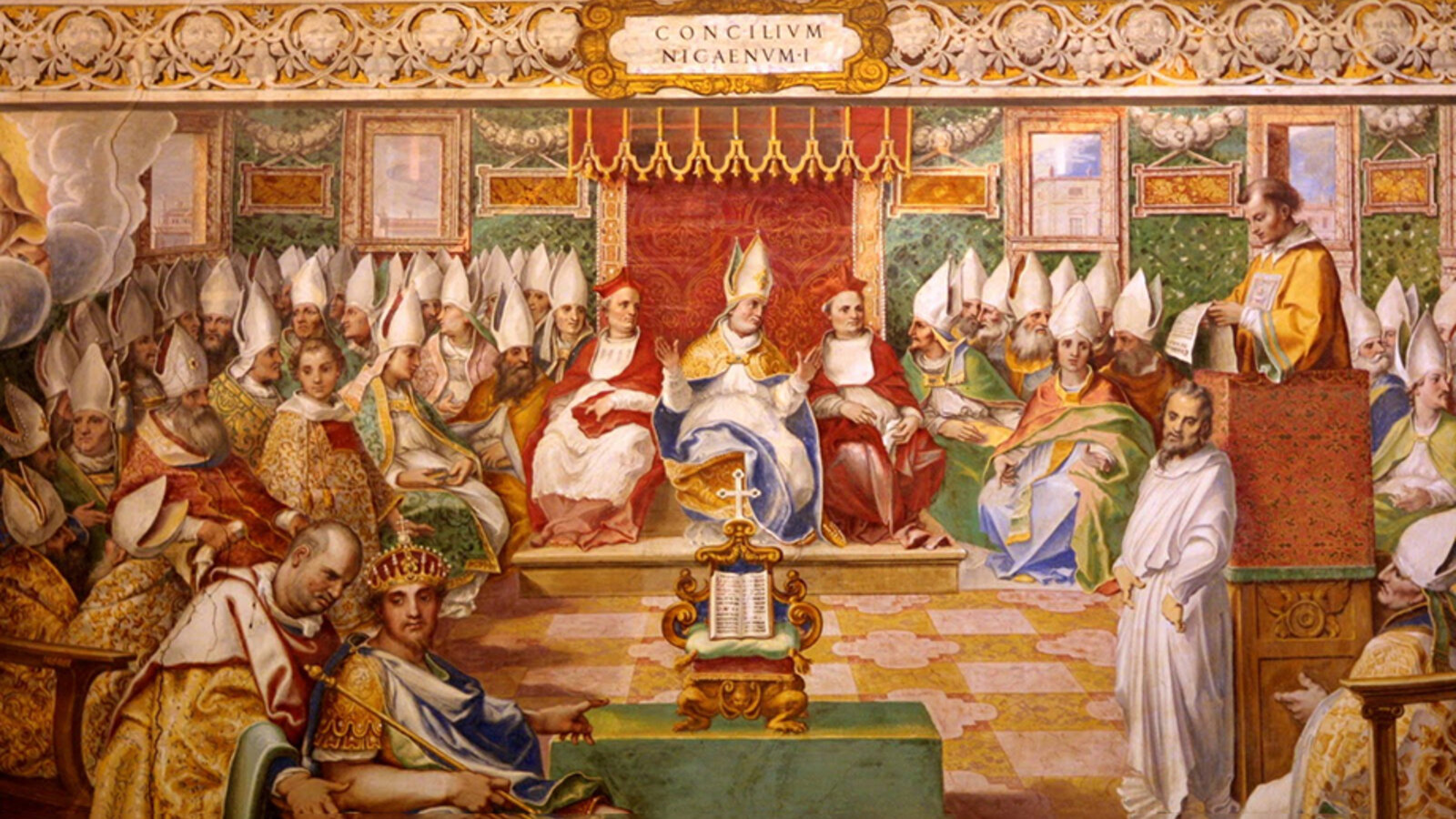
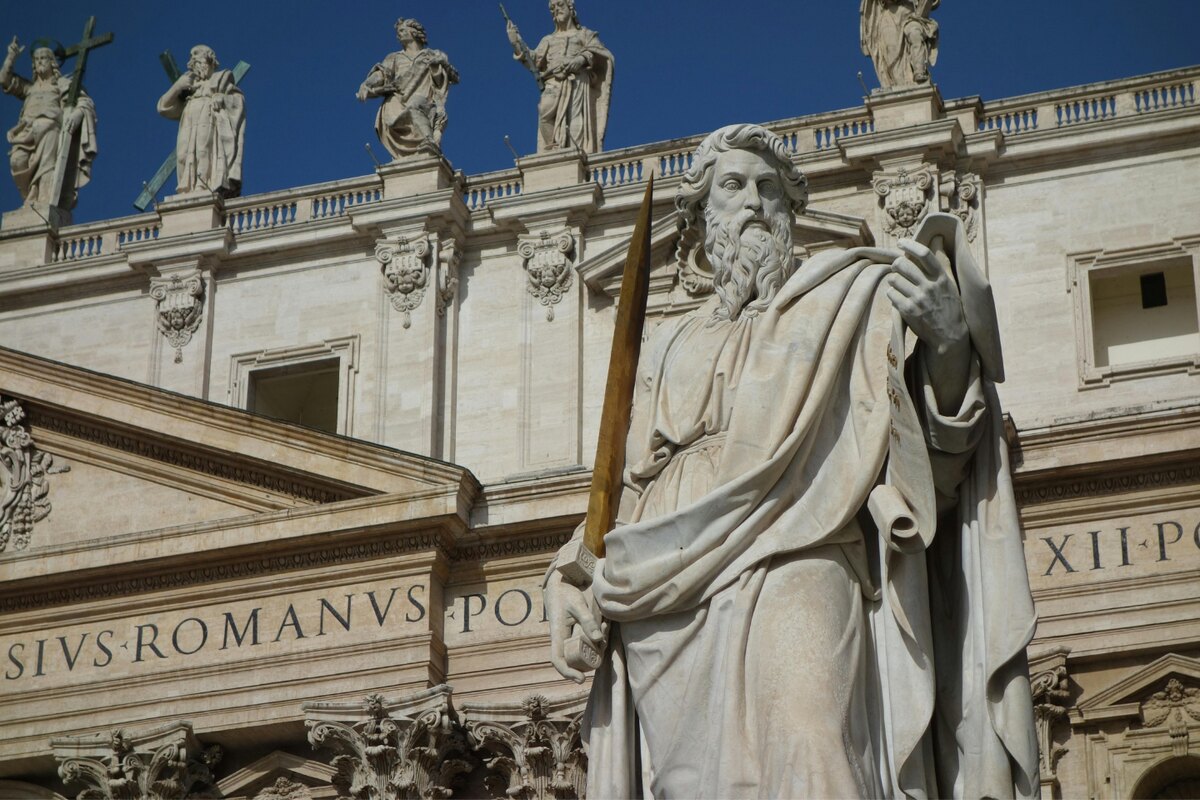
Paul’s genius, and his world-changing conviction, was that the good news of Christ was not for the Jewish people alone but for everyone — for the Gentiles, the non-Jews who made up the vast majority of the Roman world. It was a radical and contested idea in the earliest Church, and Paul became its tireless champion, insisting that faith in Christ, not the observance of the Jewish Law, was the path open to all nations. The question split the earliest Church to its core: must a Gentile become a Jew — be circumcised, keep the whole Law of Moses — before he could be a Christian? Paul said no, and he fought for that answer without flinching, even confronting the Apostle Peter to his face when he thought him wavering. The matter was thrashed out at a meeting in Jerusalem around the year 50, often called the first council of the Church, which came down on Paul’s side: the door to Christ was to be left open to all, without the burden of the old Law. It is hard to overstate what hung on that decision. Had it gone the other way, Christianity might have remained a current within Judaism; because of Paul, it became a faith for the whole world. To carry that message he undertook three enormous missionary journeys across the empire, travelling thousands of miles by ship and on foot through Asia Minor and Greece, founding and nurturing Christian communities in city after city — Antioch, Philippi, Thessalonica, Corinth, Ephesus — and famously debating the philosophers of Athens before the Areopagus. When he could not be present, he wrote, and it is through those writings that he shaped the faith most profoundly. The letters of Paul — to the Romans, the Corinthians, the Galatians and the rest — are the earliest Christian documents we possess, older than the Gospels, and they laid down the great themes of Christian theology: grace, faith, the meaning of the Cross, the life of the Spirit. More than a dozen books of the New Testament bear his name. No one except Christ himself has left a deeper mark on what Christians believe.
The cost of the road
It is easy to picture Paul as a writer and a thinker and to forget what those decades on the road actually cost him, but he never forgot, and in one unforgettable passage of his second letter to the Corinthians he set it all down. Five times, he writes, he received from the synagogues the thirty-nine lashes; three times he was beaten with rods; once he was stoned and left for dead; three times he was shipwrecked, and spent a night and a day adrift in the open sea. He knew danger from rivers and bandits, from his own people and from strangers, in the city and in the wilderness; he knew hunger, cold, sleeplessness and the daily weight of anxiety for all the churches he had founded. Through it all he refused to be a burden, earning his own bread with his hands as a tentmaker so that no one could say he preached for money. He carried, too, some private affliction he never names, the famous “thorn in the flesh” he begged God three times to remove, and was answered instead with the words that became the heart of his faith: “My grace is sufficient for you, for my power is made perfect in weakness.” It is the key to the whole man — not an untouchable hero but a battered, driven, deeply human one, who had learned that his strength lay precisely where he was weakest.
The long road to Rome
Paul’s boldness made him enemies, and around the year 57 he was arrested in Jerusalem after a riot in the Temple. Held for two years and facing powerful accusers, he played the one card that was his by birth: as a Roman citizen he appealed to Caesar, demanding to be tried in Rome itself. It was his right, and it set him on the last and strangest of his journeys. Rome was a city he had long dreamed of reaching: years earlier he had written to the Christians there of his deep longing to come to them, and had declared plainly, “I must also see Rome.” Now, a prisoner in chains, he would get his wish in a way he could never have imagined. Under guard, he was put aboard ship for Italy — and the voyage became an ordeal that the Acts of the Apostles describes in vivid, first-hand detail: caught in a fortnight-long storm on the Mediterranean, the ship was finally wrecked on the island of Malta, where every soul aboard reached shore alive, and where Paul, unharmed by the bite of a viper, was taken by the islanders for a god. From Malta he came at last up the Italian coast and the Appian Way to the capital of the world. The Acts of the Apostles ends there, leaving him under house arrest in Rome, awaiting trial but free to receive visitors and to preach “with all boldness and without hindrance” — the Gospel carried, as its first believers had dreamed, to the very heart of the empire.
Martyrdom on the Ostian Way
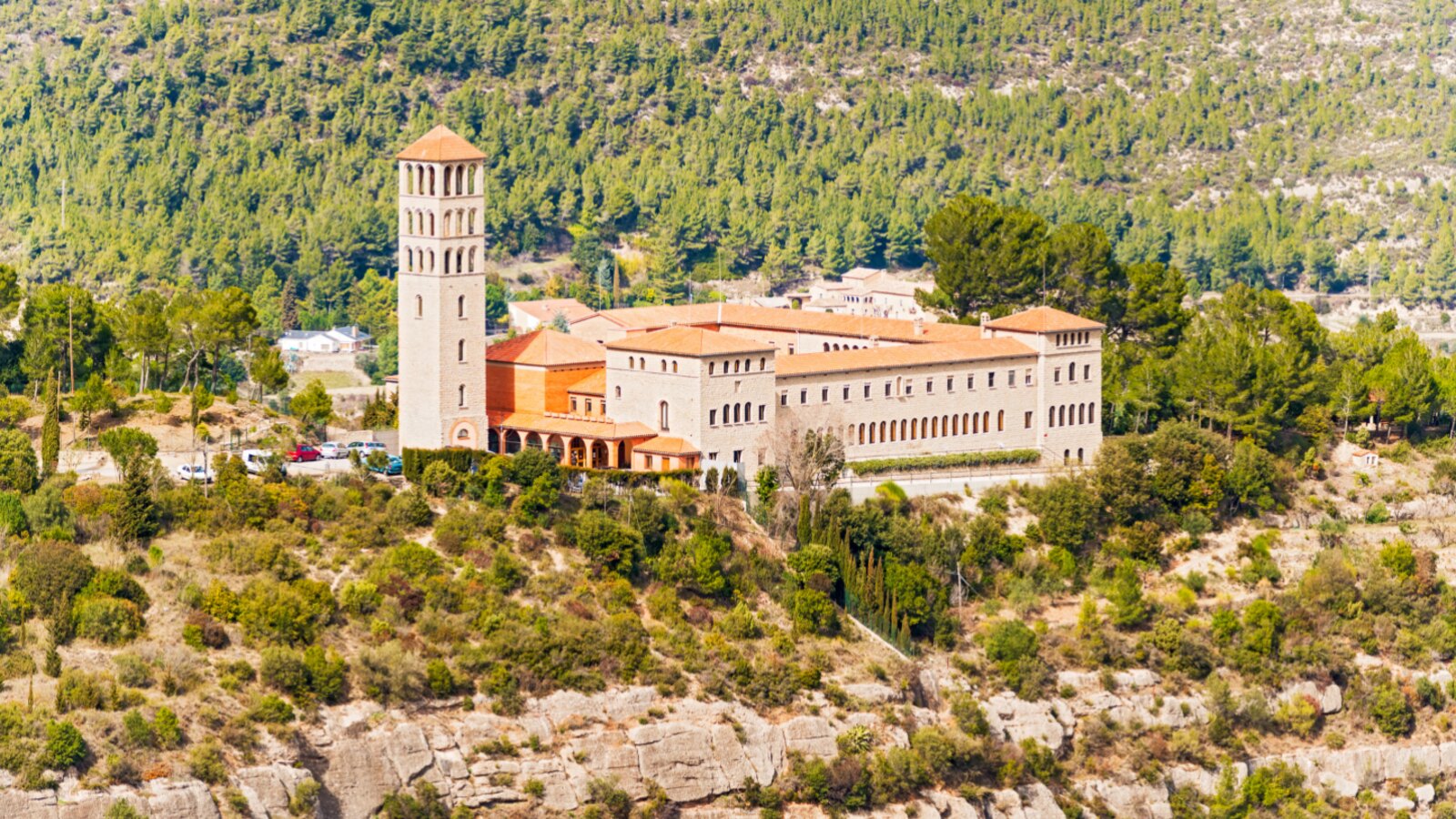
Scripture falls silent at the house arrest, but the earliest and most constant tradition of the Church tells what came after. In Rome Paul met the same fate as the Apostle Peter, in the savage persecution of Christians launched by the emperor Nero around the mid-60s. But where Peter, a foreigner, was crucified, Paul’s Roman citizenship spared him that degrading death and won him the swifter end reserved for citizens: beheading. He was led out of the city along the road to the port of Ostia and executed at a place in the countryside now called the Three Fountains — Tre Fontane — where a monastery marks the spot to this day. A tender old legend gives the place its very name, telling how the severed head of the apostle bounced three times upon the ground, and how at each spot a spring of fresh water broke from the earth — the three fountains. His body was buried nearby, beside the Ostian Way, in the tomb of a Christian woman named Lucina. There the grave of Paul remained, quietly venerated by the faithful through the centuries of persecution, a fixed and remembered point in the soil just outside the walls of Rome — waiting for the day the empire itself would kneel at it.
Beneath St Paul Outside the Walls
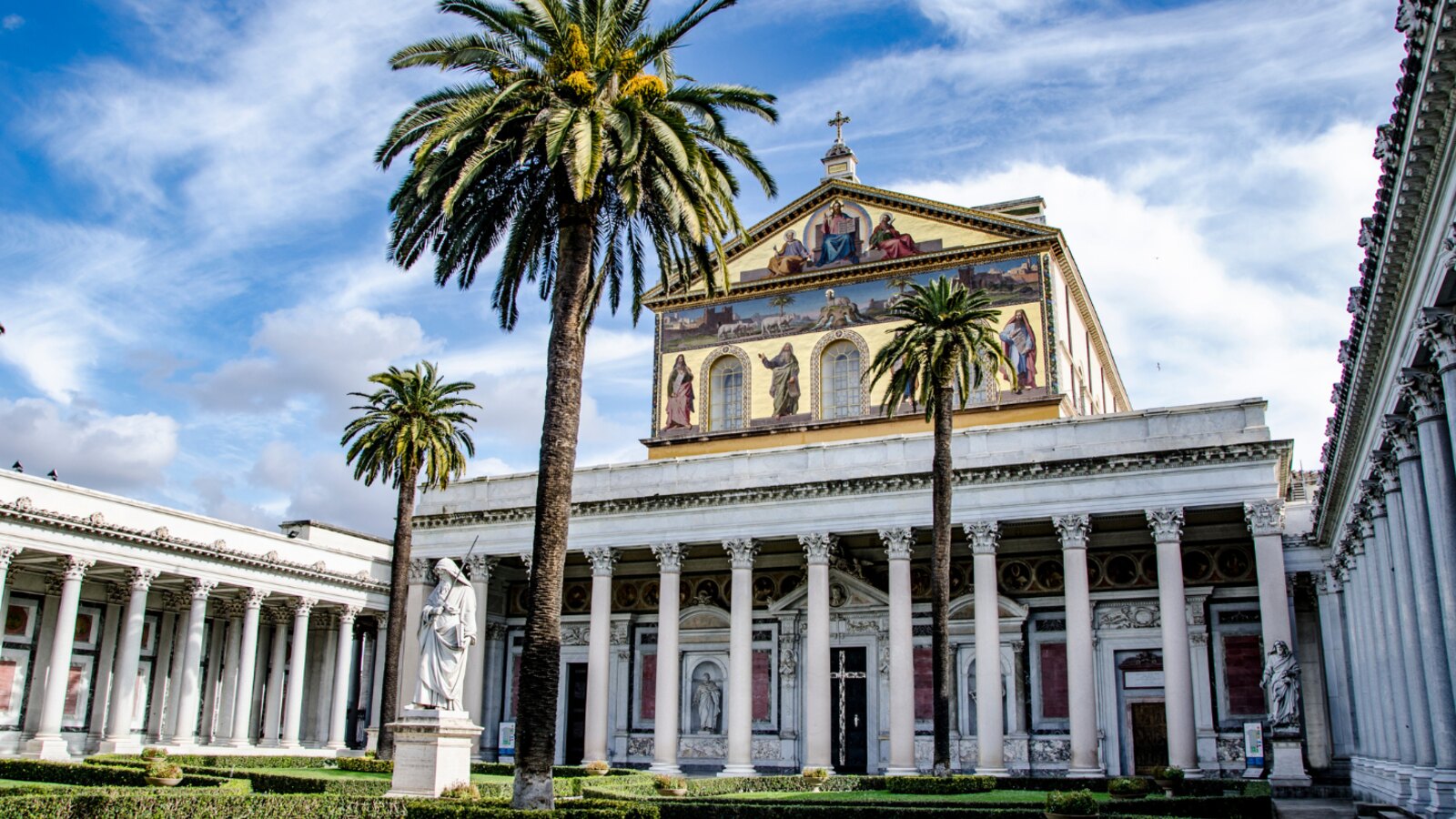
That day came with the emperor Constantine. Having made Christianity legal, he raised over the apostle’s grave on the Ostian Way a basilica, later enlarged by the emperors into one of the most magnificent churches in the world. Rebuilt after a catastrophic fire in 1823, it stands today as the Basilica of St Paul Outside the Walls — San Paolo fuori le Mura — one of the four great papal basilicas of Rome, a vast and solemn hall of white marble and golden ceilings, its upper walls ringed with the portraits of every pope from Peter to the present — and a much-loved Roman superstition holds that when the last empty medallion is filled, the world will end. The ancient basilica that had stood here for fifteen centuries was all but destroyed by fire in 1823, when a careless workman’s brazier set the roof ablaze, and the loss was mourned across the Christian world; sovereigns from as far away as Egypt and Russia sent gifts of marble, malachite and alabaster for the rebuilding, so that the vast church you enter today, faithful to the old plan, glows with the offerings of half the earth. And beneath its high altar, exactly where tradition always placed it, lies the tomb. Modern archaeology has given that tradition remarkable support: excavations early in this century uncovered, directly under the altar, a great stone sarcophagus, and above it an ancient marble slab inscribed in Latin, PAULO APOSTOLO MART — “to Paul, Apostle and Martyr.” In 2009 Pope Benedict XVI announced that fragments of bone drawn from within the sealed coffin had been radiocarbon-dated to the first or second century, consistent, he said, with the unbroken tradition that these are the remains of the Apostle. To stand before that altar is to stand, as nearly as anywhere on earth, at the grave of the man who wrote the letter to the Romans.
The words that outlived him
Paul was executed, but his sentences were not, and it is through them that he still speaks to more people than ever heard his voice. His letter to the Romans, written to a church he had not yet visited, became perhaps the most influential piece of writing in Christian history: it was a line from it that, read in a Milan garden, broke open the heart of the restless Augustine and gave the Church its greatest theologian, and it was Paul’s teaching on being made right with God by faith that lit the fuse of Martin Luther and, through him, of the whole Reformation. From his pen come words that have long since escaped the walls of theology into ordinary life: the soaring hymn to love in his first letter to the Corinthians — “love is patient, love is kind… and the greatest of these is love” — read at countless weddings by people who could not name its author, and his own serene epitaph, written as the end drew near: “I have fought the good fight, I have finished the race, I have kept the faith.” For two thousand years the Church has measured its own convictions against the mind of this one tireless correspondent. The man died on the Ostian Way; the words never did.
Walking Paul’s Rome
Few saints have left so clear a trail across a single city, and to follow Paul through Rome is to walk the last chapter of his life in order. It begins underground, at the Mamertine Prison below the Capitol, the grim ancient cell where tradition holds that Paul — and Peter with him — were confined before their deaths, a dank chamber now kept as a shrine. It leads out along the line of the old Ostian Way to the quiet monastery of the Three Fountains, the Abbazia delle Tre Fontane, raised at the place of his beheading and still a haven of silence among the trees. And it ends at the great Basilica of St Paul Outside the Walls, before the tomb itself. Together with the Basilica of St Peter across the river, these places make Rome what it has been for two thousand years: not merely the capital of an empire but the city of the two apostles who died in it, and whose graves turned the seat of Caesar into the centre of the Christian world. Paul’s road ran from a blinding light near Damascus to a sword on the Ostian Way; its end, and in a sense its monument, is Rome.
Whether you are a pastor planning a journey for your congregation or a traveller going on your own, we build trips through Christian Italy around understanding — so that walking Paul’s Rome, from the Mamertine cell to the Three Fountains to his tomb, becomes the living close of his story rather than three stops on a list. Tell us about your trip and we’ll start planning it with you.
Plan your pilgrimage →Common questions
Paul of Tarsus (born around the start of the first century) was a Jewish Pharisee and Roman citizen who at first persecuted Christians, then converted after a vision of the risen Christ on the road to Damascus. He became the great missionary to the Gentiles, wrote much of the New Testament, and was martyred in Rome.
According to the Acts of the Apostles, around AD 34 Saul was travelling to Damascus to arrest Christians when a light from heaven struck him blind and the voice of Jesus asked, “Saul, why do you persecute me?” He was baptised three days later and became the apostle Paul. It is the most famous conversion in history.
Tradition holds that Paul was martyred in Rome during Nero’s persecution in the 60s AD. Because he was a Roman citizen, he was beheaded rather than crucified, at a spot on the road to Ostia now called the Three Fountains (Tre Fontane), and was buried nearby on the Ostian Way.
Beneath the high altar of the Basilica of St Paul Outside the Walls (San Paolo fuori le Mura) in Rome, built over his grave on the Ostian Way. Excavations have found a sarcophagus there inscribed “Paul, Apostle and Martyr,” and in 2009 bone fragments from it were carbon-dated to the first or second century.
Because he carried the Gospel across the Roman Empire and opened the faith to non-Jews, and because his letters — the earliest Christian writings, older than the Gospels — laid the foundations of Christian theology. After Christ himself, no one shaped the Christian faith more deeply than Paul.
At three linked places: the Mamertine Prison, where he is said to have been held; the Abbey of the Three Fountains (Tre Fontane), the traditional site of his beheading; and the Basilica of St Paul Outside the Walls, built over his tomb. Together they trace the final chapter of his life.