The Black Madonnas of Italy
High in the mountains of Italy, in sanctuaries reached by long roads and longer processions, sit some of the most loved and most mysterious images of the Virgin Mary in the world. They are statues and ancient icons like countless others — the Mother crowned, the Child on her knee — save for one arresting difference: their faces are dark, sometimes a deep brown, sometimes almost black. These are the Black Madonnas, and there are hundreds of them scattered across Europe, with a particular concentration in Italy, where whole regions have taken a dark-faced Virgin as their patron and protector. To the scholars they are a puzzle still argued over; to the millions of ordinary people who climb to their shrines, they are simply la Madonna — a mother whose darkened face, far from troubling the faithful, has only deepened their devotion. For centuries these dark Virgins have been crowned by popes, defended as the honour of their cities, and begged for rain, for healing and for safe return, and they remain to this day among the most visited and most loved shrines in the whole country. This is the story of who they are, why they are black, and where to find the greatest of them in Italy — and why, once you have stood before one of them, you never quite forget her face.
What is a Black Madonna?
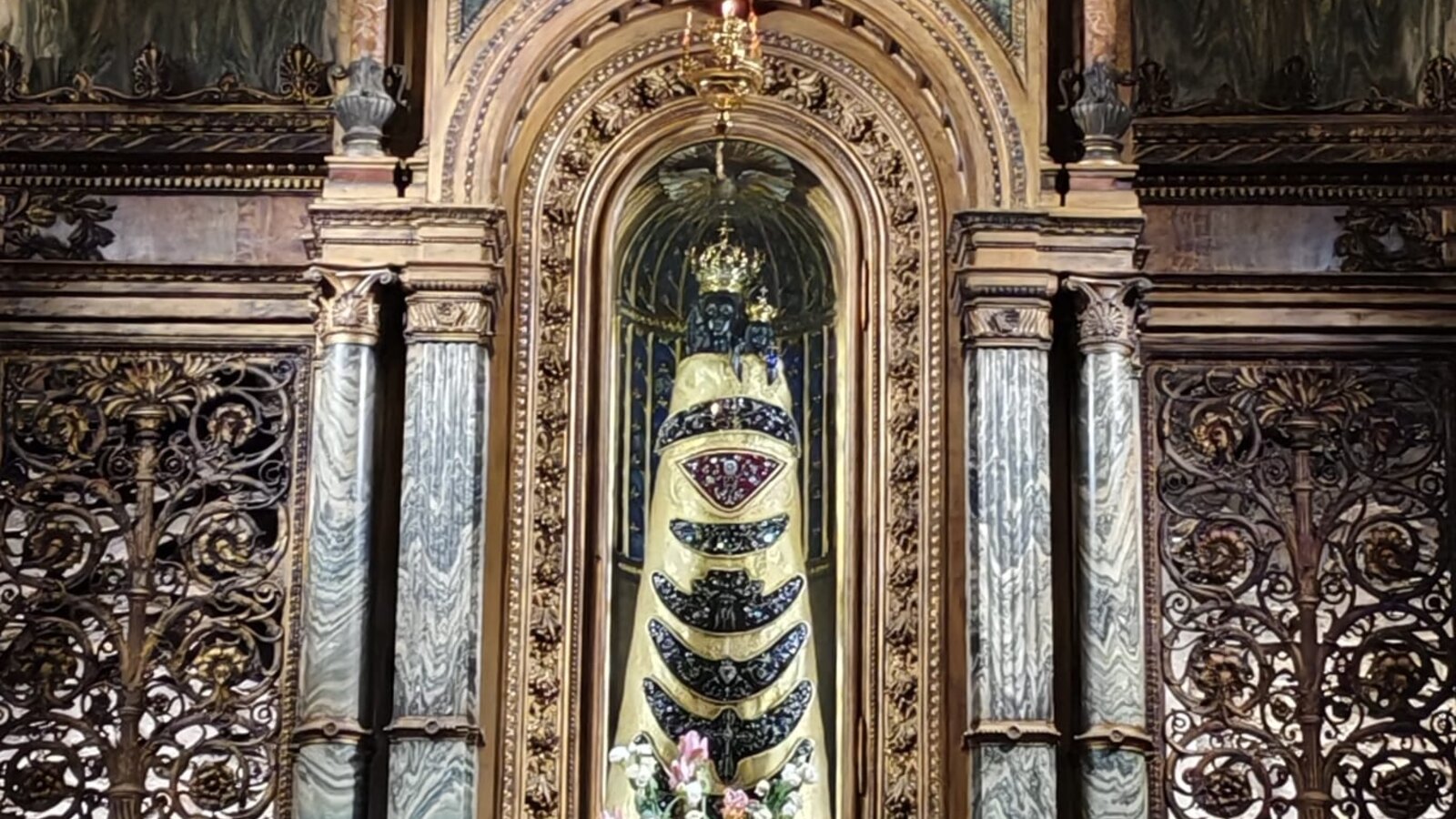
A Black Madonna is, quite simply, an image of the Virgin Mary — usually a carved and painted wooden statue, sometimes a flat Byzantine-style icon — in which the skin of Mary, and often of the Christ child she holds, is dark. They are not a separate sort of devotion or a different Mary; they are the same Mother of God venerated everywhere, portrayed with a black face. Most are very old, dating from the Middle Ages, and a striking number are enthroned in remote hilltop and mountain sanctuaries rather than in grand city churches — places that were already holy, often, long before the present shrine was built. Across Europe there are several hundred of them, from Our Lady of Częstochowa in Poland to the Moreneta of Montserrat in Spain, and Italy is especially rich in them, from the Alps to Sicily. France alone, above all the volcanic uplands of the Auvergne, counts scores of them; Spain, Poland, Germany and Switzerland each have their own famous ones; and a great many of Italy’s, especially in the south and in Sicily, are dark Byzantine icons and statues carried west from the Greek East as the Christian empire of Constantinople crumbled, finding a second home in Italian hill-shrines. Wherever one of them settled, it tended before long to become the single most venerated image for miles around, the Madonna to whom a whole district turned in trouble. What unites them is not a doctrine but a feeling: an intensity of popular love, a sense that these particular images are especially powerful, especially close, especially quick to hear a prayer. Many of the oldest belong to a particular medieval type the art historians call the Sedes Sapientiae, the “Throne of Wisdom”: the Virgin seated rigidly upright and facing forward, a small and solemn Christ enthroned on her lap like a king — images carved not to be admired as art but to be prayed to, and serving for centuries as the single most sacred object of their town or valley. In very many places the Black Madonna is simply the image, the one the whole community has loved longest and trusted most.
The two most famous of all
Though Italy is especially rich in them, the two most celebrated Black Madonnas in the world stand just beyond its borders, and they show how deep this devotion runs across Catholic Europe. In Poland, at the hilltop monastery of Jasna Góra, is Our Lady of Częstochowa, a dark and solemn icon that tradition, improbably, attributes to the hand of Saint Luke himself. Her face bears two long scars on the right cheek — the marks, legend says, of a raider’s sword that slashed the image in 1430, wounds that could never afterwards be painted over — and she is honoured as the Queen of Poland, the spiritual heart of the whole nation. In Spain, high on the serrated mountain of Montserrat near Barcelona, the Benedictines guard La Moreneta, “the little dark one,” a Romanesque statue who is the patroness of Catalonia and whose outstretched orb generations of pilgrims have climbed the mountain to touch. Between them these two dark Virgins draw many millions of pilgrims a year, proof that the pull of the Black Madonna is no Italian curiosity but one of the great devotional currents of the whole Christian world — of which Italy holds perhaps the richest share.
Why are they black?
This is the question everyone asks, and the truth is that there is no single answer. Scholars who have studied the Black Madonnas offer several explanations, and the truth is probably that different images are dark for different reasons. For many, the darkness is simply the work of time: centuries of candle smoke, lamp soot and incense, together with the slow oxidising of old varnishes and the decay of certain pigments, have blackened faces that were once a natural flesh tone — a devotion quite literally darkened by the smoke of its own prayers. The famous dark statue of Loreto is a case in point: already in the sixteenth century, when churchmen fretted over liturgical propriety, the faithful themselves insisted that the Madonna’s dark face was simply the residue of their own candles and lamps — a darkness they were proud of rather than ashamed of, the visible trace of generations of prayer. Others were dark from the start, carved from naturally dark woods such as cedar, or deliberately painted so. And over all of them hangs a line of Scripture that the faithful have long applied to the Virgin, the words of the bride in the Song of Songs: “Nigra sum sed formosa” — “I am black but beautiful.” Some writers have gone further, tracing the Black Madonnas to the dark earth-mother goddesses of the pre-Christian world, whose mountain shrines were later crowned with a Virgin; it is a romantic idea, popular and much repeated, but one most serious historians treat with caution, since the evidence is thin and the simpler explanations usually suffice. What is certain is that the darkness, whatever its origin, was never a problem for those who knelt before them. If anything, it made the image more wondrous, more ancient, more their own.
“Nigra sum sed formosa” — I am black but beautiful.Song of Songs 1:5
What the darkness came to mean
However the Black Madonnas first came to be dark, something more interesting happened afterwards: the faithful made the darkness mean something. Far from explaining it away, generations of believers embraced it, reading in the shadowed face a sign of mystery, of great antiquity, of a Virgin older and deeper than words. The darkness suggested the fertile earth and the long night of faith; it suggested humility, the lowliness Mary herself had sung of; it suggested, in that line from the Song of Songs, a beauty that is not the easy beauty of the world. Preachers and poets wove these meanings around the dark images until the colour that may have begun as soot or dark cedar became, for the people who knelt before them, part of the holiness itself. This is how popular devotion so often works: it takes what it is given — a fire, a scar, a darkened face — and finds God in it. The Black Madonnas are a perfect example of a faith that does not need everything explained in order to love it, which is perhaps the real reason the scholars have never had the last word on them. The people decided long ago that their Mother was dark and beautiful, and for them that has always been enough.
The great Black Madonnas of Italy
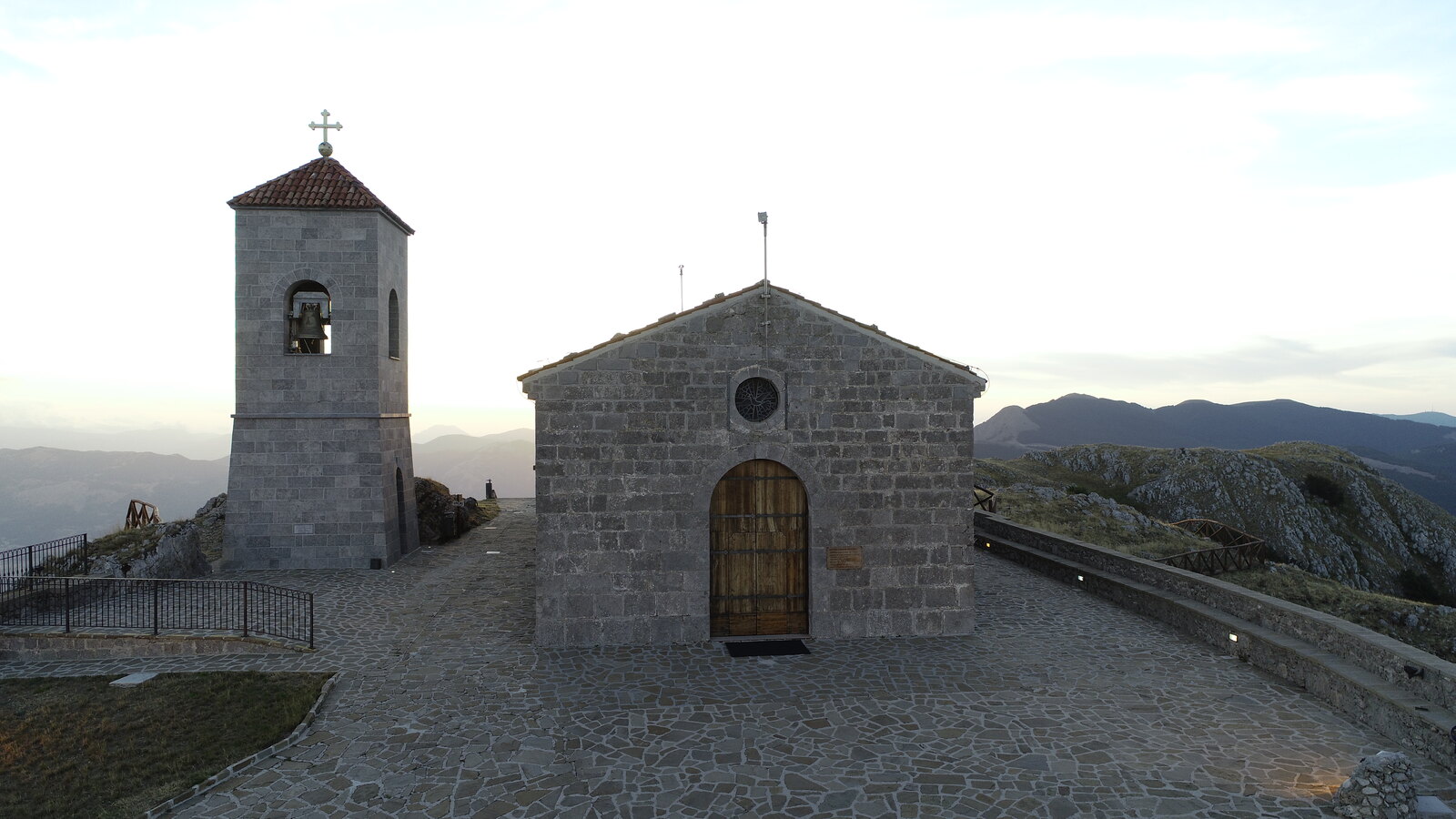
Italy’s dark Virgins run the whole length of the peninsula, and each is the beating heart of its region. In the north, above Biella in Piedmont, the Sanctuary of Oropa guards a Black Madonna venerated since the Middle Ages, one of the most important Marian shrines in the Alps, set amphitheatre-like against the mountains. On the Adriatic side, in the Marche, the Holy House of Loreto — believed by tradition to be the very house of Nazareth, carried to Italy — holds a famous dark statue of the Madonna; the original was lost in a fire in 1921 and recarved, deliberately dark, in cedar wood. South of Naples, the great Benedictine abbey of Montevergine, high above Avellino, enshrines a much-loved Black Madonna the local people call with rough affection Mamma Schiavona, the object of some of the most passionate popular devotion in all of Italy. Deep in Basilicata, the Madonna del Sacro Monte di Viggiano reigns from a bare mountain top as the patroness of the whole region of Lucania, carried in procession up and down the mountain each year. And in Sicily, above the sea at Tindari, sits a dark Byzantine Madonna said to have arrived by ship from the East, beneath whose throne is carved that same proud line — Nigra sum sed formosa. These are only the most famous; dozens more are scattered through the hill towns and sanctuaries of Italy, each with its feast, its procession and its fiercely devoted people.
Each of these shrines carries its own stories, and they are worth knowing before you go. At Oropa the statue has never been restored or recoloured in all the centuries it has been venerated, and every hundred years the town crowns her anew in a great jubilee that gathers the whole valley. At Loreto the dark Madonna presides over what tradition holds to be the actual house of the Holy Family, flown, the legend says, from Nazareth to the Italian coast — which is why she was made the patroness of those who travel by air. At Montevergine the Candlemas pilgrimage each February fills the mountain with music and dancing of an almost pre-Christian warmth, a devotion that has gathered to itself the outcast and the overlooked for centuries. And at Viggiano the dark Virgin spends the warm months enthroned on her bare mountain summit and the cold ones down in the town below, carried up and down each year on the shoulders of her people in one of the most heartfelt processions in the south. These are not museum pieces. They are living centres of a devotion that has never cooled.
A devotion of the people
What is most striking about the Black Madonnas is not the mystery of their colour but the sheer force of love they attract, and the kind of people who give it. This is faith at its most unofficial and most unstoppable — not the religion of theologians and councils, but the religion of grandmothers and shepherds, of vows whispered in dialect and graces counted on worn rosaries. These are, overwhelmingly, the Madonnas of ordinary Italians — of shepherds and farmers and emigrants, of the mountain villages and the poor South, of people whose faith is less a matter of books than of the heart. Their shrines sit not in the marble heart of great cities but high and hard to reach, and the climb to them, on foot and often barefoot, is itself part of the devotion; the great feasts draw tens of thousands who walk through the night to be there at dawn. There is an intimacy in it that formal religion does not always allow: people speak to these dark Mothers as to their own, bring them their griefs and their harvests and their sick children, weep before them and dance before them, and in places like Montevergine the devotion keeps an earthy, exuberant warmth centuries old. Whole regions have placed themselves under a Black Madonna’s protection and renew that bond every year. To watch one of these processions — the heavy image swaying up a mountain road on the shoulders of weeping men, a whole people following — is to understand that for millions the faith was never an abstraction but exactly this: a dark-faced mother who could be touched, and trusted, and loved. It is a devotion that followed Italians wherever they went: the emigrants who left the poor villages of the South for the Americas carried their Black Madonnas with them in their hearts and on their walls, and founded in distant cities the same feast-day processions they had known as children, so that a dark Virgin of some Italian mountain is still carried through the streets of New York or Buenos Aires once a year. Few things reveal the true religious soul of Italy more plainly than this stubborn, tender loyalty to a blackened face on a far-off summit.
Walking the Black Madonnas of Italy
For a traveller who wants to understand the real religious life of Italy — not only its cathedrals and its art but the living faith of its people — the Black Madonnas offer one of the most moving journeys there is, a thread that runs the whole length of the country. It can begin in the Alps at Oropa, in Piedmont, and come down the Adriatic to the Holy House of Loreto; it can reach the Benedictine heights of Montevergine above Avellino, the mountain of Viggiano in the wild heart of Basilicata, and at last the Sicilian headland of Tindari above its turquoise sea. Go, if you can, in the season of the great feasts, when the mountain roads fill with pilgrims travelling on foot and the thin high air carries the sound of singing and brass bands; but give yourself, too, a quiet hour in the dim sanctuary long after the crowds have gone, when it is only you and the dark, calm face glowing steadily above its bank of candles. That silence, in a place a whole people has loved for a thousand years, is when these shrines speak most clearly, and when the question of why the face is dark gives way to something simpler and larger — the sense of standing where countless others have stood to lay down their burdens. Each is beautiful in itself, set in landscapes of real grandeur; but their deeper reward is what they reveal of the people who love them, a devotion older and warmer than anything a guidebook describes. To arrive at one of these shrines knowing what it is — why the face is dark, what the Song of Songs says, what the mountain meant before the church was built — is to see past the curiosity to the thing itself: one of the oldest and most tender currents of Italian faith, still flowing.
Whether you are a pastor planning a journey for your congregation or a traveller going on your own, we build trips through Christian Italy around understanding — so that a shrine like Oropa, Loreto or Viggiano becomes a window into the living devotion of the Italian people rather than a curiosity. Tell us about your trip and we’ll start planning it with you.
Plan your pilgrimage →Common questions
A Black Madonna is an image of the Virgin Mary — usually a medieval wooden statue, sometimes an icon — in which her face, and often the Christ child’s, is dark or black. They are not a different Mary but the same Mother of God, portrayed dark, and they are among the most venerated images in Catholic Europe, with many in Italy.
There is no single reason. Many were darkened over the centuries by candle smoke, soot and ageing varnish; some were carved from dark wood or painted dark from the start; and the Song of Songs line “I am black but beautiful” was long applied to them. A theory linking them to pre-Christian earth goddesses is popular but treated cautiously by most historians.
Across the whole country. Among the most famous are Oropa in Piedmont, the Holy House of Loreto in the Marche, Montevergine above Avellino, the Sacro Monte di Viggiano in Basilicata, and Tindari in Sicily. Each is a major regional sanctuary with its own feast and pilgrimage.
It is Latin for “I am black but beautiful,” a line from the Song of Songs (1:5) spoken by the bride. Christian tradition applied it to the Virgin Mary, and it became closely associated with the Black Madonnas; at Tindari in Sicily it is carved beneath the statue itself.
Yes. They are fully part of Catholic devotion to the Virgin Mary, venerated like any other Marian image. Several are among the most important shrines in Italy, crowned by popes and made the patrons of entire regions. Their dark colour has never affected their place in the faith.
Several do. The Madonna del Sacro Monte di Viggiano is the patroness of Basilicata (Lucania), carried in procession on her mountain each year, and other dark Virgins such as those of Oropa and Montevergine are the beloved protectors of their own territories across northern and southern Italy.