St Augustine: the Confessions and the Road to Faith
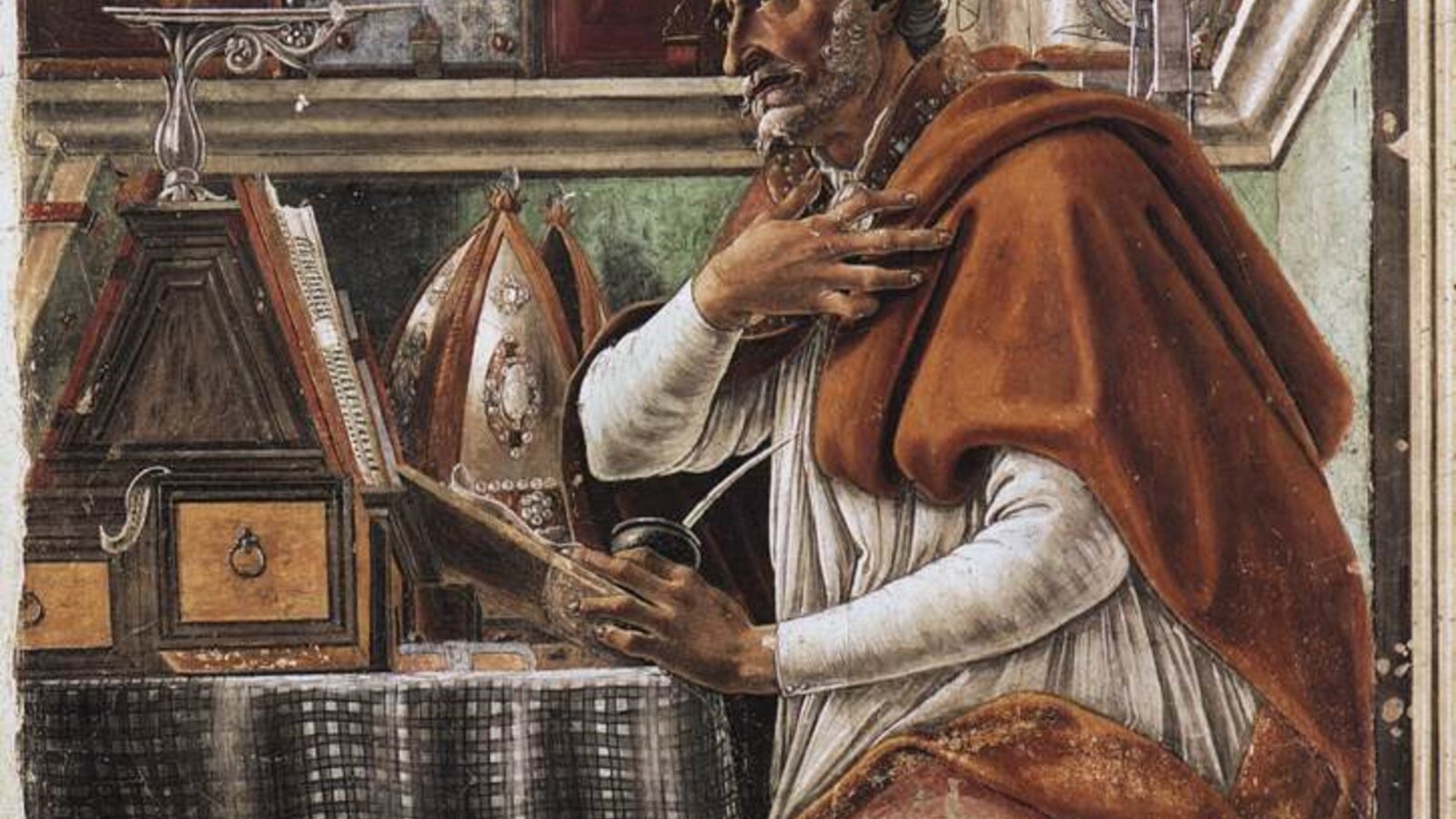
Sixteen hundred years ago a brilliant, ambitious and deeply unhappy young man sat weeping in a garden in Milan, his life in ruins of his own making, and heard a child’s voice in a neighbouring house chanting over and over, “Tolle, lege” — “take up and read.” He opened the letters of Saint Paul at random, read a single sentence, and in that instant the long war inside him was over. The young man was Augustine, and he would become one of the towering figures of the Western world: bishop, philosopher, and the author of the Confessions, the most searching account of a human soul ever written. His was the first great story of a modern-seeming conversion — restless, intellectual, hard-won — and it happened not in the Holy Land or in Africa where he was born, but in Italy, in Milan; his mother died near Rome; and his body, after an extraordinary journey, lies today in the city of Pavia. This is the story of how a dissolute genius became a saint, and where in Italy you can still trace his road to God.
A restless heart
Augustine was born in the year 354 in Thagaste, a small town in Roman North Africa, in what is now Algeria. His father was a pagan of modest means; his mother, Monica, was a devout Christian whose tears and prayers for her wayward son would become one of the most famous examples of a mother’s faith in all of Christian history. Clever beyond his years, Augustine was sent to study rhetoric in Carthage, and there the appetites of a gifted young man ran away with him. He took a mistress, with whom he lived for many years and had a beloved son, Adeodatus; he chased success, pleasure and reputation; and though his mother begged him toward the faith, he could not bring himself to accept it. His own prayer of those years is one of the most candid lines he ever wrote, and it has made countless readers wince with recognition ever since: “Lord, make me chaste — but not yet.” For a long time he gave himself instead to Manichaeism, a fashionable philosophy that promised answers, and to the pursuit of worldly glory, carrying within him all the while a restlessness he could neither name nor quiet. He was unsparing, too, in later remembering his own faults: in the Confessions he agonises for pages over a boyish prank, the stealing of pears from a neighbour’s tree not even out of hunger but for the sheer thrill of doing wrong, finding in that trivial theft the whole dark mystery of why human beings choose evil at all. And through every one of those wandering years his mother never gave up on him. Monica wept and prayed without ceasing, and once, when she begged a bishop to reason her clever son out of his errors, he gave her the answer that has steadied anxious parents ever since: “Go your way; it cannot be that the son of these tears should perish.”
Milan, Ambrose and the garden
Ambition carried Augustine across the sea to Italy — first to Rome, and then, in the year 384, to Milan, then a capital of the Roman Empire, where he won the prestigious post of professor of rhetoric. It was the making of him, though not in the way he intended. In Milan he began to listen, at first only to study the oratory, to the sermons of the city’s formidable bishop, Ambrose — and slowly the great objections that had kept him from the faith began to fall away. Ambrose showed him that the Scriptures could be read with subtlety and depth, not as the crude book the Manichees had mocked, while the writings of the Neoplatonist philosophers lifted his mind toward a God who was pure spirit rather than matter. Piece by piece the intellectual walls came down, and only the wall of the will remained. His mother Monica, who had followed him to Italy, prayed on. His mind was persuaded, but his will would not follow; he longed to give himself to God and could not let go of the life he knew, and the struggle brought him at last to breaking point. The crisis came in a garden in the summer of 386. Weeping under a fig tree, torn in two, he heard the child’s sing-song voice next door — tolle, lege — and taking it as a command from heaven, he snatched up the book of Saint Paul’s letters and read the first words his eye fell upon, in the letter to the Romans: a call to put off the works of darkness and “put on the Lord Jesus Christ.” “I had no wish,” he wrote, “to read further, and no need to. Instantly… a light of certainty flooded my heart, and all the shadows of doubt fled away.” The long war was over.
“Late have I loved you, Beauty so ancient and so new; late have I loved you.”The Confessions of St Augustine
Baptism, and a death at Ostia
At the following Easter, in the year 387, Augustine was baptised by Ambrose himself in Milan, together with his son Adeodatus — one of the great moments of the Christian centuries, enacted in the heart of Italy. His mother Monica had lived to see the one thing she had prayed for across a lifetime, and her work was done. As the little family began the journey home to Africa, they stopped at Ostia, the port of Rome, and there mother and son shared a famous moment of mystical joy, leaning at a window and speaking together of eternal life in a conversation Augustine would later set down as one of the most luminous passages of the Confessions. For a few moments, he wrote, the two of them seemed to rise beyond all earthly things and to touch, however briefly, the very edge of eternal Wisdom, before the sound of their own voices drew them gently back to earth; and Monica told him that for her part she no longer knew what she was still doing in this life, now that the one hope she had carried for so long had at last been granted. Days later, at Ostia, Monica fell ill and died, content at last. “Lay this body anywhere,” she told her sons; “only this I ask, that you remember me at the altar of the Lord.” She has been venerated ever since as Saint Monica, the patron of mothers and of all who pray, with tears, for those they love.
Bishop of Hippo
Augustine returned to North Africa a changed man, meaning to live quietly in prayer and study, but the Church had other plans for a mind like his. Against his own wishes he was ordained a priest, and in 395 he was made Bishop of Hippo, a busy port city on the African coast, where he would serve for the next thirty-five years. He proved as great a pastor as he was a thinker: preaching constantly to his people, settling their quarrels, feeding the poor, defending the faith against the heresies of the age in letters and books that poured from him in a flood. From this working bishop’s desk came the writings that would shape the entire future of Western Christianity — on grace and free will, on the Trinity, on the nature of time and memory and the human heart — so that for the next thousand years and more, every theologian in the West, Catholic and later Protestant alike, would build on Augustine. He is honoured as one of the four great Latin Doctors of the Church, and arguably the most influential Christian writer after Saint Paul himself. Much of that writing was forged in the heat of controversy. He spent years opposing the Donatists, a rigorist African sect that had torn the Church apart, arguing that the holiness of the sacraments depends on Christ and not on the personal worthiness of the priest who administers them — a principle the Church holds to this day. And against a monk named Pelagius, who taught that men could make themselves good by their own effort without God’s help, Augustine defended so powerfully the necessity of freely given grace that he has been called ever since the Doctor of Grace. The questions he wrestled with at that African desk — freedom and grace, sin and mercy, the reach of God into a human will — became the questions the whole Western Church would argue over for the next fifteen centuries.
The Confessions
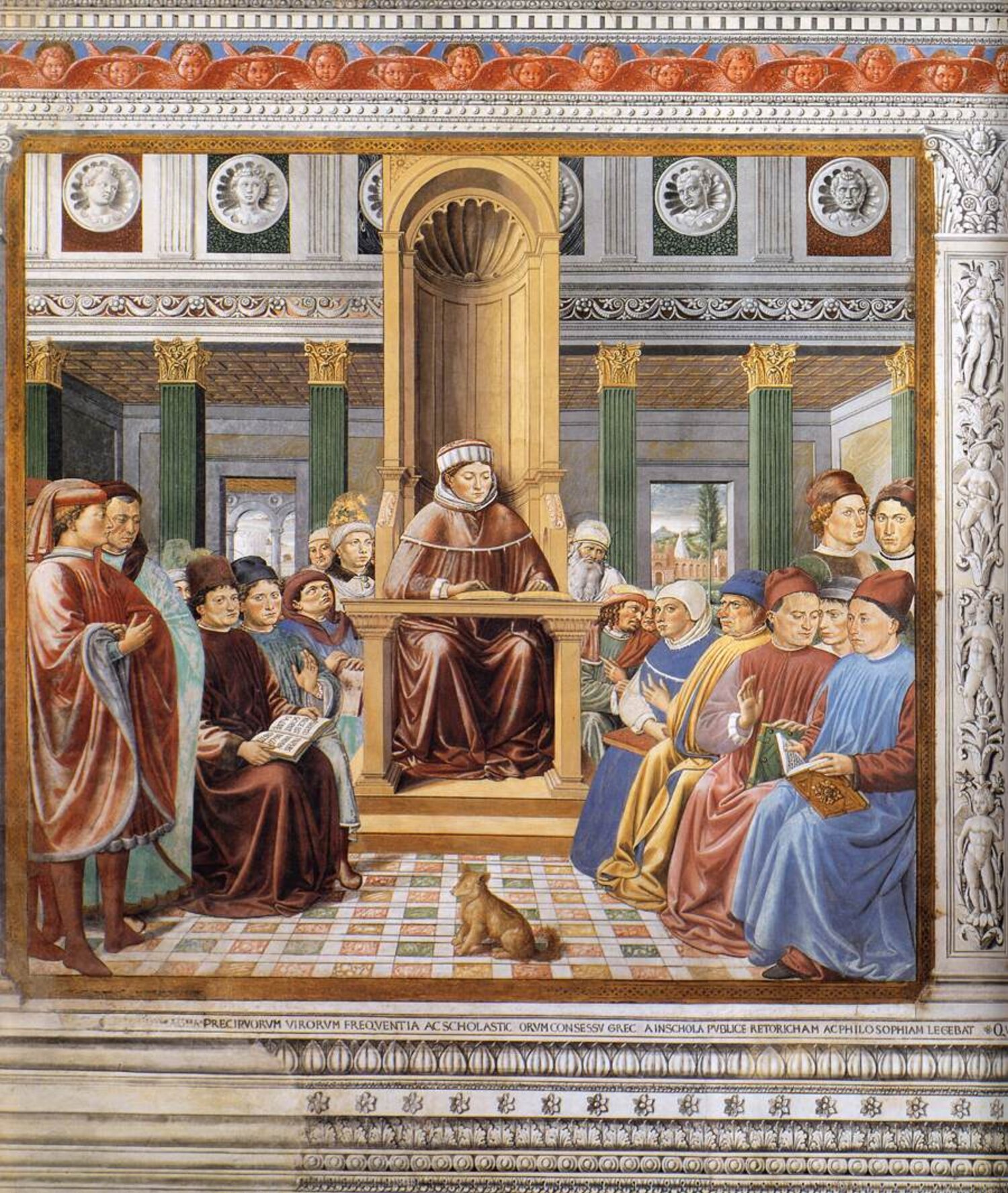
Of everything Augustine wrote, one book has never stopped being read, and it is unlike anything written before it. The Confessions, composed around the year 397, is the first true autobiography in Western literature — but it is far more than a memoir. It is a long, unflinching prayer, addressed throughout directly to God, in which Augustine lays bare his whole life: his childhood thefts, his lusts, his pride, his years of error, and the slow, aching journey by which grace drew him home. No one before had written of the inner life with such psychological candour, such restless intelligence, such naked longing; its opening cry — “you have made us for yourself, O Lord, and our heart is restless until it rests in you” — has become one of the most quoted sentences in the history of faith. He writes of memory and of time with a depth philosophers still study; he traces the turning of a soul with a precision no one had attempted before him; and he does it all not to parade his sins, nor even his rescue, but to praise the God who was, as he puts it in a line of almost unbearable tenderness, closer to him than he was to himself. Sixteen centuries later the Confessions still speaks with astonishing immediacy to anyone who has ever searched, doubted, failed and begun again; it is the reason Augustine feels less like a remote Church Father than like a voice from inside our own struggles, the first man in history, it is often said, to write as a modern soul.
The City of God
If the Confessions looked inward, Augustine’s other masterpiece looked out upon the whole sweep of history. In the year 410 the unthinkable happened: the city of Rome, mistress of the world, was sacked by the Goths, and a shaken empire asked whether the abandonment of its old gods for Christianity had brought the catastrophe down. Augustine answered with the City of God, a vast work written over more than a decade, in which he set against the failing City of Man — every earthly empire, built on pride and destined to pass — the eternal City of God, the community of those who love him, which no barbarian can sack and no century can end. Two cities, he wrote, have been built by two loves: the earthly city by the love of self reaching even to contempt of God, and the heavenly city by the love of God reaching even to contempt of self; and the whole tangled drama of human history is the long story of those two loves. It was a book that taught a frightened age how to hold on to hope while the world fell apart around it, and it shaped the Western understanding of history, politics and the Church for a thousand years. Written as one empire died, it has spoken to every age that feared its own was dying too.
Death at Hippo, and the long road to Pavia
Augustine died on the 28th of August 430, an old man of seventy-five, as a new darkness closed in: the Vandals, a Germanic people sweeping across North Africa, were at that very moment besieging the walls of his own city of Hippo. He did not live to see it fall. And here his story takes its last, strange turn, the one that brings it home to Italy. To save his remains from the chaos of the African collapse, his relics were carried across the sea to Sardinia; and when, some three centuries later, even Sardinia grew unsafe, the Lombard king Liutprand bought the bones of the great saint, around the year 724, and had them brought north to his capital at Pavia. There they rest to this day, in the basilica of San Pietro in Ciel d’Oro — “Saint Peter in the Golden Sky” — beneath the Arca di Sant’Agostino, a soaring white marble tomb carved in the fourteenth century and covered with hundreds of sculpted figures telling the story of his life. The African bishop who found God in a Milan garden lies, at the last, in the heart of Lombardy, honoured by the popes who have come to pray at his tomb. Dante, writing nine centuries later, set Augustine among the greatest souls of his Paradise; religious orders of friars across the world still live by the Rule that bears his name; and the handsome brick basilica in Pavia, so far from the Africa of his birth, has become one of the quiet great shrines of Italy, where the restless heart that wrote the Confessions has now lain at rest for some thirteen hundred years.
Walking Augustine’s Italy
Few saints are so deeply woven into Italy, and his road can still be walked. It begins in Milan, where he was converted and baptised: beneath the great cathedral you can descend to the excavated remains of the ancient baptistery where, tradition holds, Ambrose received him into the Church. It passes through Ostia Antica, the evocative ruined port of Rome where Monica died and where the famous vision was shared — and on to Rome itself, where Monica’s own relics were later brought and now rest in the church of Sant’Agostino. And it ends in Pavia, the quiet, handsome old Lombard capital south of Milan, before the marble ark that holds the bones of the man himself. To make that journey knowing the story — the garden, the voice, the tears of a mother, the restless heart finally at rest — is to follow one of the most human and most hopeful pilgrimages in all of Christian Italy: the road of a man who tried everything the world could offer, found it empty, and only then found what he was looking for. It is, perhaps, the journey that speaks most directly of all to the modern traveller, for Augustine’s doubts were our doubts and his questions are still ours, and the long road he walked home is one that a great many people, knowingly or not, are walking still.
Whether you are a pastor planning a journey for your congregation or a traveller going on your own, we build trips through Christian Italy around understanding — so that Milan, Ostia and Pavia become the living road of Augustine’s conversion rather than three names on a map. Tell us about your trip and we’ll start planning it with you.
Plan your pilgrimage →Common questions
Augustine (354–430) was a North African bishop, philosopher and theologian, one of the four great Latin Doctors of the Church. After a dissolute youth he was converted and baptised in Milan, became Bishop of Hippo, and wrote the Confessions and the City of God, shaping Western Christianity more than any writer except St Paul.
In a garden in Milan in 386, torn between the faith and his old life, Augustine heard a child’s voice chanting “Tolle, lege” — “take up and read.” He opened St Paul’s letter to the Romans, read a single passage, and was converted at once. He was baptised by St Ambrose the following Easter, in 387.
The Confessions, written around 397, is the first true autobiography in Western literature — a long prayer addressed to God in which Augustine lays bare his sins, his searching and his conversion. Its famous opening, “our heart is restless until it rests in you,” has made it one of the most beloved spiritual books ever written.
In the basilica of San Pietro in Ciel d’Oro in Pavia, northern Italy, beneath the marble Arca di Sant’Agostino. His relics were carried from Hippo to Sardinia after his death, and around 724 the Lombard king Liutprand brought them to Pavia, where popes still come to venerate them.
Monica was Augustine’s mother, a devout Christian who prayed and wept for his conversion over many years and followed him to Italy. She lived to see him baptised and died soon after at Ostia, near Rome. She is venerated as Saint Monica, patron of mothers and of those who pray for their children.
In Milan, where he was converted and baptised (the ancient baptistery survives beneath the cathedral); at Ostia Antica, where his mother Monica died; and above all in Pavia, where his tomb stands in San Pietro in Ciel d’Oro. Monica’s relics rest in the church of Sant’Agostino in Rome.