Carlo Acutis: the Boy Who Became the First Millennial Saint
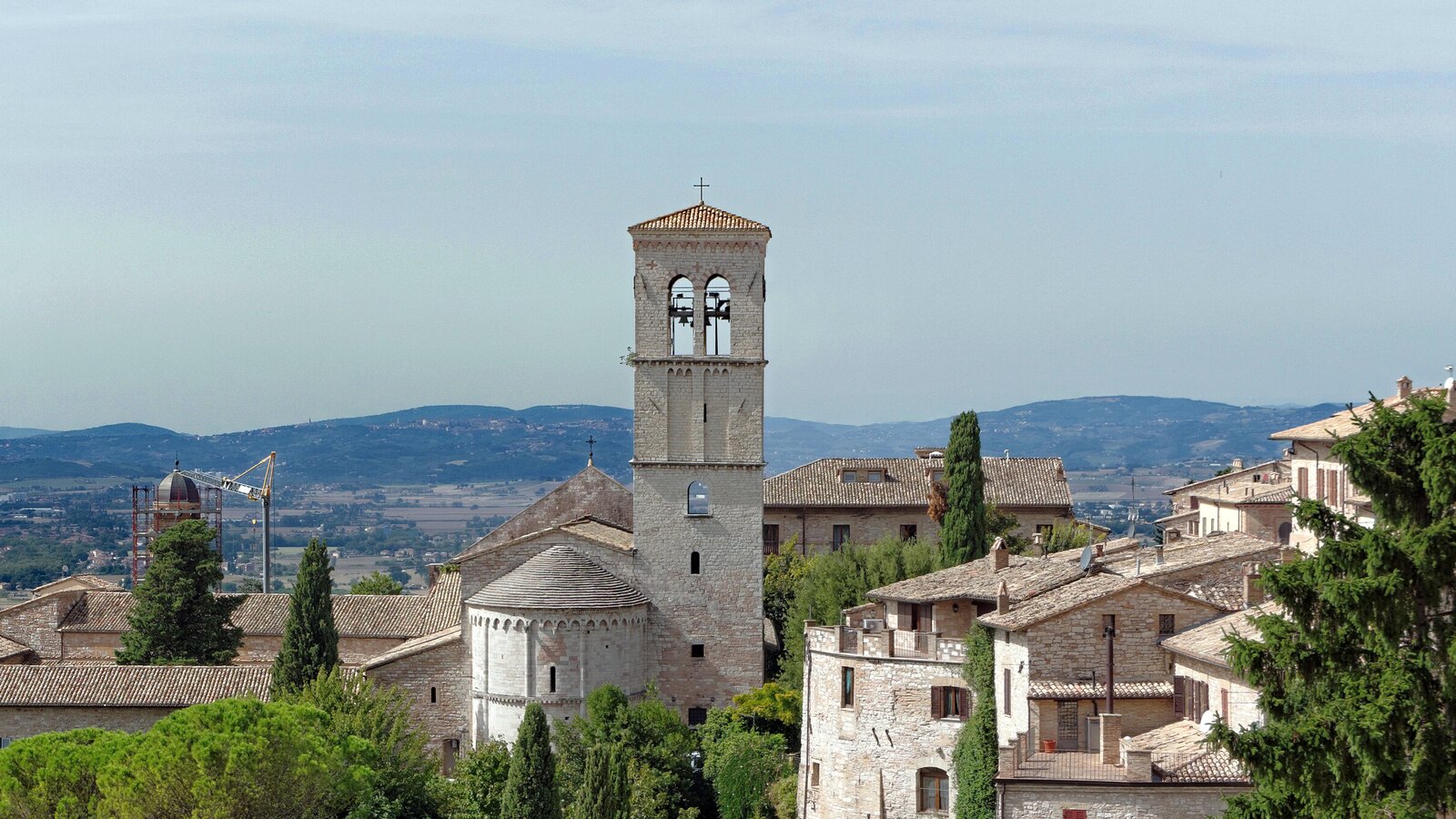
Carlo Acutis was an ordinary Italian teenager — born in 1991, at home with computers, dead of leukaemia at fifteen — and on 7 September 2025, in St Peter’s Square, Pope Leo XIV declared him a saint: the first of the millennial generation, a boy who was alive when the first iPods were, and who now lies venerated in Assisi a short walk from St Francis. He is remembered for one strange and beautiful project: in his free hours, with a teenager’s laptop, he set about cataloguing the Eucharistic miracles of the world and putting them online. To stand at his tomb — where he is laid out behind glass in the jeans and trainers he wore in life — is to feel the whole length of the thread we follow on this site, the one that runs from the catacombs, unbroken, into our own century, pulled suddenly tight. He is proof, in sneakers, that the oldest claims of the faith are still being made by people who were in school when the millennium turned.
This is not a distant story, and that is exactly its power. To arrive in Assisi understanding who Carlo was is to see the town not as a pretty hill of churches but as the place where a medieval saint and a modern boy are laid within the same walls — which is the whole of what we mean by pilgrimage, not tourism.
Who was Carlo Acutis?
He was born in London on 3 May 1991 to an Italian family who moved home to Milan while he was still an infant, and by every account his childhood was unremarkable in the best sense. He liked computers and taught himself to code; he played the PlayStation, but rationed himself to an hour a week; he kept dogs and cats, filmed small videos, and was the kind of boy his classmates remember for defending whoever was being picked on and for talking to the school janitors as readily as to the teachers. What set him apart was quieter and harder to photograph: from the age of seven he went to Mass almost daily, gave his pocket money to the homeless of Milan, and spoke about God with the directness of someone describing a friend. “The Eucharist,” he said, in a line now printed on a million holy cards, “is my highway to Heaven”; and in another that has outlived him, “We are all born as originals, but many of us die as photocopies.” It is precisely his ordinariness that makes him legible to the whole Christian world — not a mystic shut in a cell, but a boy in a tracksuit who happened to take his faith with complete seriousness, and who seems to have decided, early and calmly, not to live as a copy of anyone.
The boy who catalogued miracles
When he was about eleven, Carlo became fascinated by the Eucharistic miracles scattered through the history of the Church — the handful of episodes, some more than a thousand years old, in which the consecrated bread was said to have visibly become flesh or blood, or to have survived uncorrupted for centuries. Rather than simply collect the stories, he did the thing his generation does by instinct: he built a website, and out of it a travelling exhibition of printed panels, documenting more than a hundred Church-recognised Eucharistic miracles around the world, each with its history, its place and its evidence. Many of the most famous are Italian — Lanciano, Orvieto and Siena among them — and if you want to go deeper, here is my article on the Eucharistic miracles of Italy. What began as one boy’s website became something no one expected: in the years since his death the exhibition has been shown on all five continents, in parish halls and cathedrals and at the great shrines from Lourdes to Fatima to Guadalupe, and the site he built still stands, quietly doing the work he set it. The detail worth holding onto is the shape of it — the newest tool imaginable, a teenager’s laptop, bent to the service of the oldest devotion in the Church. That is the thread made visible inside a single life, and still running after that life has ended.
Death at fifteen, and why Assisi
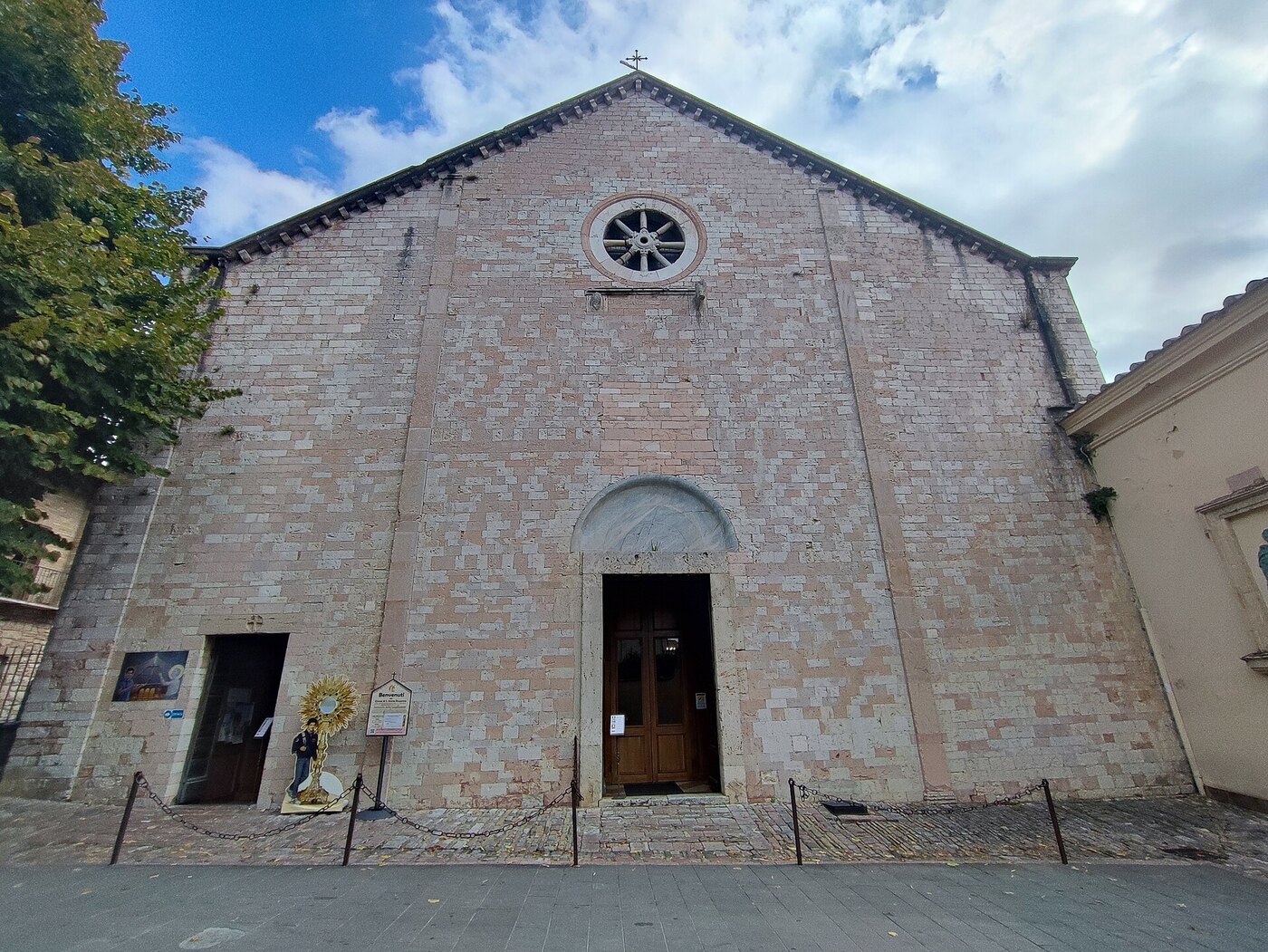
In the autumn of 2006 Carlo fell suddenly ill. The diagnosis was acute leukaemia — the aggressive, fast-moving kind — and it took him within days; he died on 12 October 2006, in a hospital in Monza outside Milan, at the age of fifteen, having, by the accounts of those near him, offered his suffering for the pope and the Church. He had asked to be buried not in the city he grew up in but in a town he loved: Assisi. The choice was not sentimental but deliberate, rooted in his devotion to St Francis, and in 2019 his body was moved there, to the Sanctuary of the Spoliation — the Santuario della Spogliazione — inside the church of Santa Maria Maggiore. The name carries the whole point, for this is the precise place where, eight centuries earlier, the young Francis of Assisi stripped off the fine clothes his merchant father had given him and handed them back, renouncing his inheritance to follow Christ in poverty. To lay a millennial saint on the exact spot of a medieval saint’s renunciation is to state the argument of a whole pilgrimage in a single building: the faith is not a museum of the past but a living line, and the distance between a boy in 1206 and a boy in 2006 is far smaller than it looks.
Is his body incorrupt?
This is the question most people arrive with, and the honest answer is no — and we would rather tell you plainly than let a lovely misunderstanding stand. When the Church speaks of “incorrupt” saints it means bodies that have resisted ordinary decay; Carlo’s has not, and the shrine’s own officials said so, describing the remains as “integral” but “not incorrupt.” What the visitor sees through the glass of the tomb is therefore a careful reconstruction: the body conserved and dressed in the jeans and trainers he wore in life, the face remade as a lifelike mask so that pilgrims meet the familiar smiling boy of the photographs rather than the reality of years in the ground. None of this makes him less, and it is worth saying why the crowds still come — not for an intact corpse, but for a life, for evidence, in their eyes, that holiness is possible in sneakers, in this century, with a laptop open on the desk. Telling the devotion apart from the legend is exactly the kind of understanding we think a pilgrim should travel with, here and everywhere.
From a bedroom in Milan to the altars
Sainthood in the Catholic Church is slow, deliberate and famously hard to rush, and Carlo’s case moved quickly only by the standards of an institution that counts in centuries. He was declared a Servant of God, then Venerable by Pope Francis in 2018, then Blessed in 2020 once the first miracle was approved, and finally a saint in 2025. It is worth being clear about what that process certifies, because it is so easily mistaken for celebrity: the Church does not canonise a person for being popular, or young, or good with computers, but for a life it judges to have been lived in heroic virtue and now holds up as something an ordinary believer could imitate — which is why the details everyone repeats, the jeans and the PlayStation and the ordinary bedroom, matter so much. The two miracles required of him each carry a thread of their own. The first, in 2013, was the healing of a small boy in Campo Grande, Brazil, born with a malformation of the pancreas, after his family prayed to Carlo. The second reaches into Italy itself: in July 2022 a twenty-one-year-old Costa Rican student, Valeria Valverde, suffered a grave head injury in a bicycle fall in Florence, and as she lay in intensive care her mother made a pilgrimage to Carlo’s tomb in Assisi, after which her recovery — rapid, and to her doctors inexplicable — began. Pope Francis approved that miracle in May 2024; the canonisation, first set for April 2025, was postponed when Francis died that same month, and finally took place on 7 September 2025, when the newly elected Pope Leo XIV proclaimed Carlo a saint together with another young Italian, Pier Giorgio Frassati.
“The Eucharist is my highway to Heaven.”Carlo Acutis
The thread, unbroken
The press reached for a nickname — “God’s influencer” — and it is not wrong, only small. What Carlo Acutis actually offers a traveller is a place to stand at the far end of the line. On this site we say that pilgrimage is not tourism, and that the reason to prepare for a journey is to understand the world the faith walked into and the thread that runs, unbroken, from it to you; usually we are speaking of Rome — the road St Paul was marched along, the cell where he was held, the tomb beneath St Peter’s. Carlo Acutis is that same thread seen from the other end. The boy who catalogued the ancient miracles on a laptop has himself become part of the history he was documenting — a link added in our own lifetime to a chain that began in the catacombs. Prepare your heart, not just your suitcase, and Assisi stops being a pretty hill town and becomes what it is: a place where you can watch the line reach all the way to the present, and keep going.
Visiting him in Assisi
Carlo’s tomb is in the Sanctuary of the Spoliation (Santa Maria Maggiore), in the lower town of Assisi, a few minutes from the great Basilica of St Francis; entry is free, it is open daily, and — fittingly for him — you can even submit prayer intentions online. Most pilgrims pair the visit with the Basilicas of St Francis and St Clare, so that Assisi becomes an afternoon in which three lives, eight hundred years apart, rest within the same walls — the medieval friar who gave everything away, the noblewoman who followed him, and the boy in trainers who came home to be buried on the spot of that first renunciation. For a church group or a family building a journey through Christian Italy, Assisi is the natural hinge between Rome and the north: the place where the story stops being ancient and becomes, unmistakably, continuous with your own.
Whether you are a pastor planning a trip for your congregation or a family travelling on your own, we build journeys through Christian Italy around understanding — so that a place like Assisi becomes the living end of a story, not just a stop on a map. Tell us about your trip and we’ll start planning it with you.
Plan your pilgrimage →Common questions
An Italian teenager (1991–2006) who loved computers and died of leukaemia at fifteen. He built a website and exhibition cataloguing the Church’s Eucharistic miracles, was canonised in 2025 as the Catholic Church’s first millennial saint, and is buried in Assisi.
On 7 September 2025, by Pope Leo XIV, alongside Pier Giorgio Frassati. The Church recognised two healings attributed to his intercession — a Brazilian boy in 2013 and a Costa Rican student injured in Florence in 2022 — the requirement for sainthood.
No. Shrine officials have said plainly that the body is “integral” but “not incorrupt.” What visitors see in Assisi is a reconstruction — the body clothed in jeans and trainers, the face remade as a lifelike mask — not a naturally preserved corpse.
In the Sanctuary of the Spoliation (Santa Maria Maggiore) in Assisi, where his body was moved in 2019. The tomb is open to the public daily and entry is free; it sits a short walk from the Basilica of St Francis.
Episodes the Catholic Church recognises in which the Eucharist is said to have visibly become flesh or blood, or to have stayed unspoilt for centuries. Carlo documented more than a hundred worldwide; the famous Italian cases are Lanciano, Orvieto-Bolsena and Siena.