St Francis of Assisi: the Rich Man Who Gave Everything Away
No saint is more loved, or more thoroughly misunderstood, than Francis of Assisi. The world remembers a gentle friend of the animals in a brown robe, the patron of birdbaths and the blessing of household pets; the truth is far more radical, and far more bracing. Francis was the pampered son of a rich cloth merchant who, in his twenties, walked away from a fortune, stripped off his clothes in the public square of Assisi and handed them back to his furious father, and spent the rest of his short life in deliberate, almost reckless poverty. He rebuilt a ruined chapel with his own hands because he was convinced Christ had asked him to; he founded an order that would reshape the whole Church; he staged the first Christmas crib the world had ever seen; he wrote one of the earliest poems in the Italian language; and, two years before he died, on a lonely mountain, he received the wounds of the crucifixion in his own hands, feet and side — the first recorded stigmatic in history. He is the principal patron saint of Italy, and his hometown, Assisi, is one of the few places on earth where the entire story of Western faith seems to gather on a single hillside.
The thread from Francis to our own moment is unusually short to the touch. The teenage saint Carlo Acutis asked to be buried in Assisi, on the very spot where Francis stripped away his wealth; and in 2013 a pope took his name, Francis, for the first time in the history of the Church. To arrive in Assisi understanding the man is to see all of that as one continuous line rather than a pretty town — which is the whole of what we mean by pilgrimage, not tourism.
The merchant’s son who wanted to be a knight
Francesco di Pietro di Bernardone was born in Assisi around 1181, into money. His father was a prosperous dealer in fine cloth, often away in France on business, and the young Francis grew up with the tastes to match — fashionable, free-spending, the life and soul of the city’s gilded youth, dreaming not of holiness but of glory as a knight. That dream collided with reality around 1202, when Assisi went to war with its neighbour and rival, Perugia; Francis rode out to fight, was captured, and spent the best part of a year in a Perugian prison, where he fell seriously ill. He came home a changed and restless man. A later attempt to ride off to another war turned back almost before it began, halted by a dream and a voice he could not explain, and over the next few years the gilded youth drifted into something his family could not recognise: long solitudes, prayer in ruined churches, an unsettling new tenderness toward the lepers he had once been unable to look at. The conversion was not a single thunderclap but a slow unravelling of everything he had been raised to want.
He stripped in the square
The turning point came in the crumbling little church of San Damiano, below the walls of Assisi, where Francis, praying before a painted crucifix, heard a voice tell him: Go, Francis, and repair my Church, which you see is falling into ruin. Taking the command literally, he sold a bale of his father’s expensive cloth to pay for the repairs — and his father, outraged at the waste and the public disgrace, dragged him before the bishop of Assisi to disown him and demand his money back. What Francis did in answer became one of the most famous gestures in the history of Christianity. In the open square, in front of the bishop and the whole town, he stripped off every piece of clothing he was wearing, handed it all back to his father, and declared that from now on he would call no one father but God in heaven. It was a total, deliberate severing from wealth, status and family at once. The place where it happened is today the Sanctuary of the Spoliation — the Spogliazione — and it is no accident that it is there, eight centuries later, that the millennial Carlo Acutis chose to be buried: a modern boy laid down on the exact spot of Francis’s renunciation, the thread pulled taut across the centuries.
Lady Poverty, and an order that changed the Church
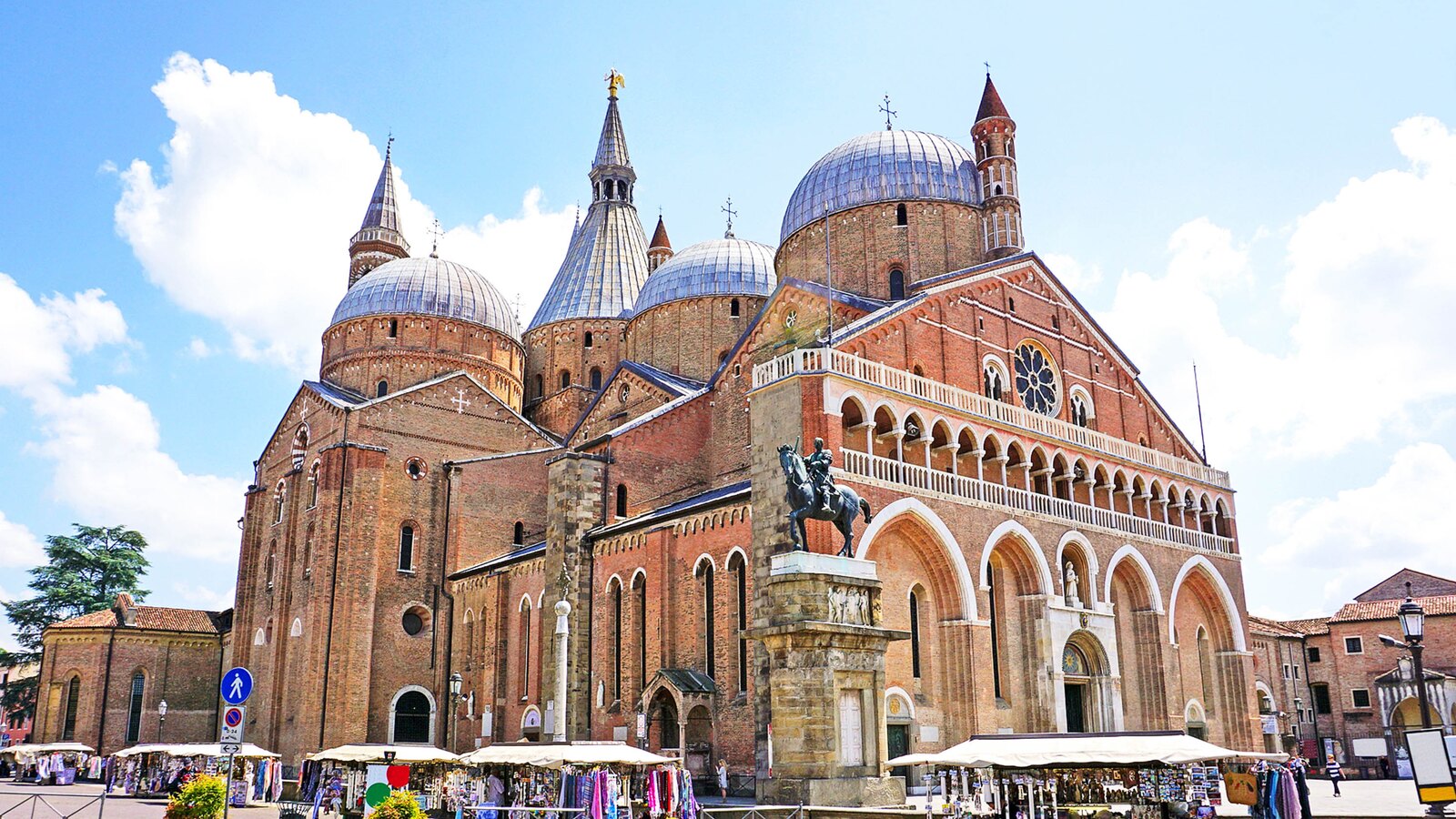
Francis did not merely give up money; he married poverty, speaking of it as a bride — “Lady Poverty” — and made it the whole programme of his life. Others began to join him, drawn by a freedom they had never seen, and in 1209 he led a ragged band of eleven followers to Rome to ask the Pope’s blessing on their simple rule of life. Innocent III, one of the most powerful popes of the Middle Ages, is said to have hesitated at these barefoot idealists before giving his approval, and from that approval grew the Franciscans, the Friars Minor, who would spread across Europe within a single generation and reshape the Church from below — a few years later a young Portuguese preacher would join that very order and become St Anthony of Padua. In 1211 a young noblewoman of Assisi, Clare, slipped away from her family to follow Francis, and under his guidance founded the order of enclosed women now called the Poor Clares. At the heart of it all stood a tiny chapel on the plain below Assisi, the Porziuncola, which Francis had rebuilt with his own hands and loved above every other place: the true cradle of the whole movement.
Brother Sun, the birds, and the first Christmas crib
What has made Francis beloved far beyond the Church is the astonishing warmth of his vision of the world, in which every created thing was kin. He called the sun his brother and the moon and stars his sisters, the wind and water and fire his brothers, and even death, at the end, “Sister Death”; and he set that vision down in the Canticle of the Creatures, a hymn of praise composed in the Umbrian vernacular that stands among the very first poems in the Italian language — the Laudato si’ from which, eight centuries on, a pope would take the title of an encyclical on the care of the earth. Around that tenderness the stories gathered: that he preached a sermon to a flock of birds who would not fly away, that he tamed a man-eating wolf terrorising the town of Gubbio by speaking to it as “Brother Wolf.” And at Christmas in 1223, in the hill village of Greccio, he did something no one had done before: he arranged a living nativity scene, with a manger, straw and real animals, so that ordinary people could see and feel the poverty of Bethlehem. Every Christmas crib set up anywhere in the world since — and in Italy the presepe is sacred — descends from that night.
The wounds on the mountain
For all the gentleness, Francis drove himself with a severity that frightened his own followers, fasting and praying to the edge of his strength. In September 1224, withdrawn in prayer and fasting on the remote mountain of La Verna in the Tuscan Apennines, he had a vision of a winged, crucified seraph, and when it faded he found the marks of the crucifixion on his own body — nail wounds in his hands and feet and a wound in his side that bled. He was the first person in recorded Christian history to bear the stigmata, three centuries before the mystics and seven before Padre Pio and the thorn-wound of St Rita of Cascia, who stand at the far end of the same strange tradition he began. He told almost no one, and hid his hands; but he carried those wounds, in real and worsening pain, through the last two years of his life.
Death, and the patron of Italy and the earth
Worn out, half-blind and seriously ill, Francis asked to be carried back to the Porziuncola to die, and there, in October 1226, he passed away at about forty-four, having asked to be laid on the bare ground and reportedly singing to the end. His feast is kept on 4 October. The Church did not hesitate over him as it would later hesitate over others: he was canonised just two years after his death, in 1228, by Pope Gregory IX, who laid the foundation stone of the great basilica built to hold his body. In 1939 Pope Pius XII named Francis the principal patron saint of Italy, together with St Catherine of Siena; in 1979 John Paul II made him the patron saint of ecology, the heavenly guardian of everyone who cares for creation; and the choice of his name by the first Pope Francis, in 2013, told the world at a glance what kind of papacy was intended. Few saints have reached so far beyond the boundaries of their own faith.
Praised be You, my Lord, with all Your creatures.St Francis, Canticle of the Creatures
Why he belongs at the centre of a pilgrimage to Italy
If any single life gathers the whole argument of this site, it is this one. Francis is the point where the history of the faith stops being a matter of popes and empires and becomes a question put to each person: what are you willing to let go of? He is also the hub from which so much else radiates — the order that produced St Anthony, the renunciation on whose spot Carlo Acutis lies, the stigmata that Padre Pio and Rita would one day share, the vision of creation a modern pope would carry into the present. To stand in Assisi understanding Francis is to feel every one of those threads meeting in one place, running unbroken from the thirteenth century into our own; and that recognition — the world a place came from, and the living line that reaches us from it — is exactly what we prepare our travellers to see, so that Assisi becomes not a lovely view but the heart of the story.
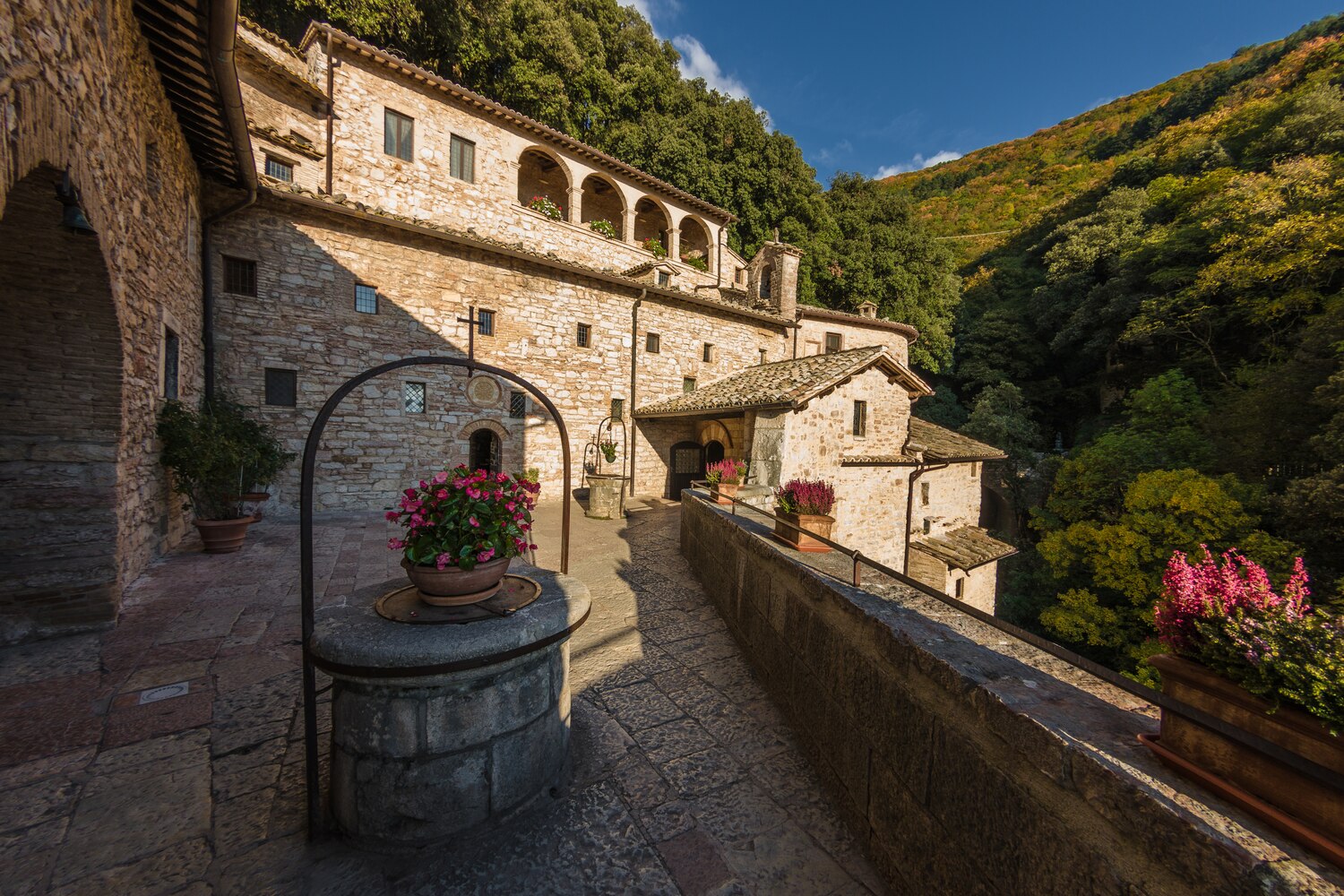
Visiting Assisi
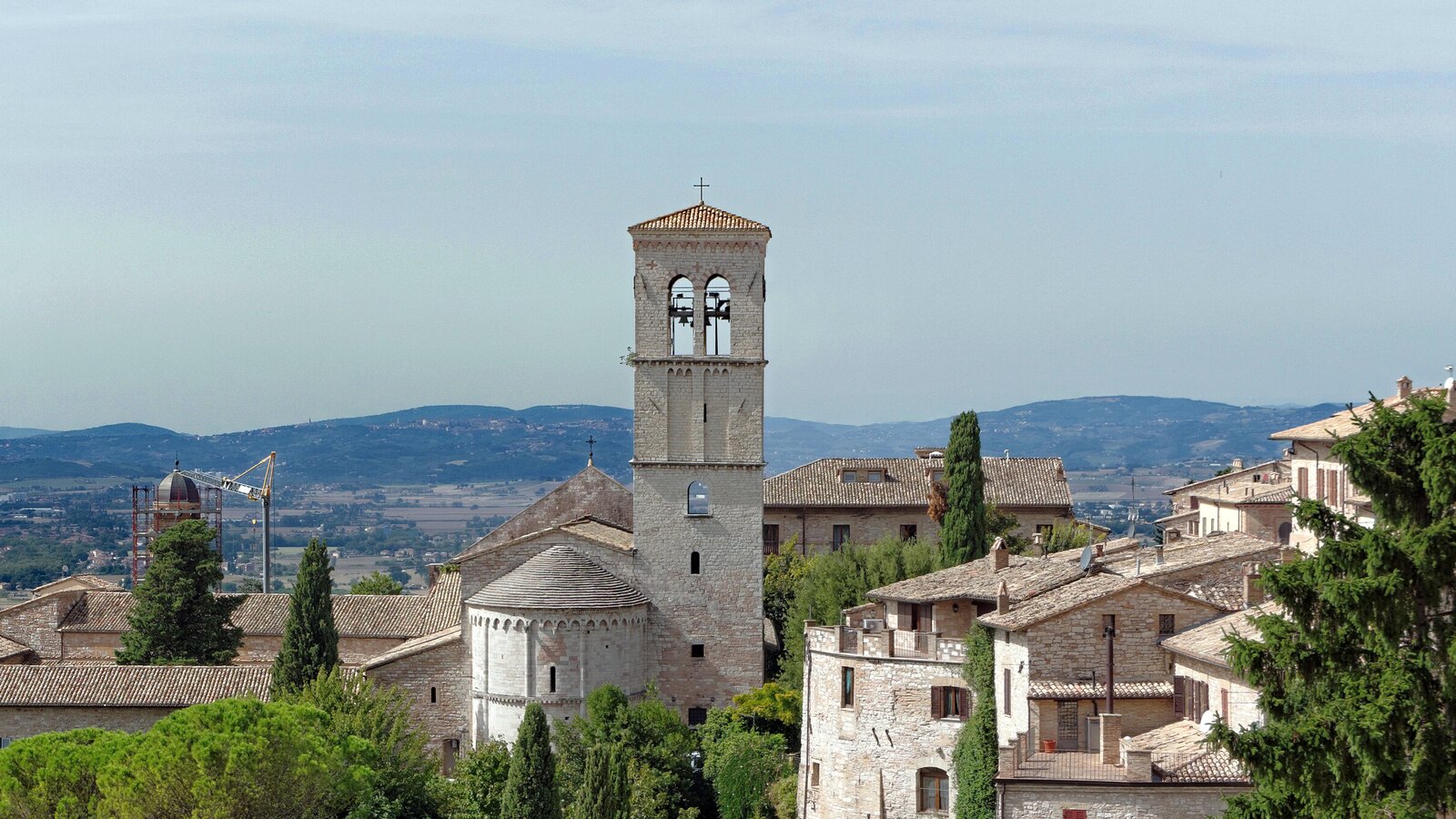
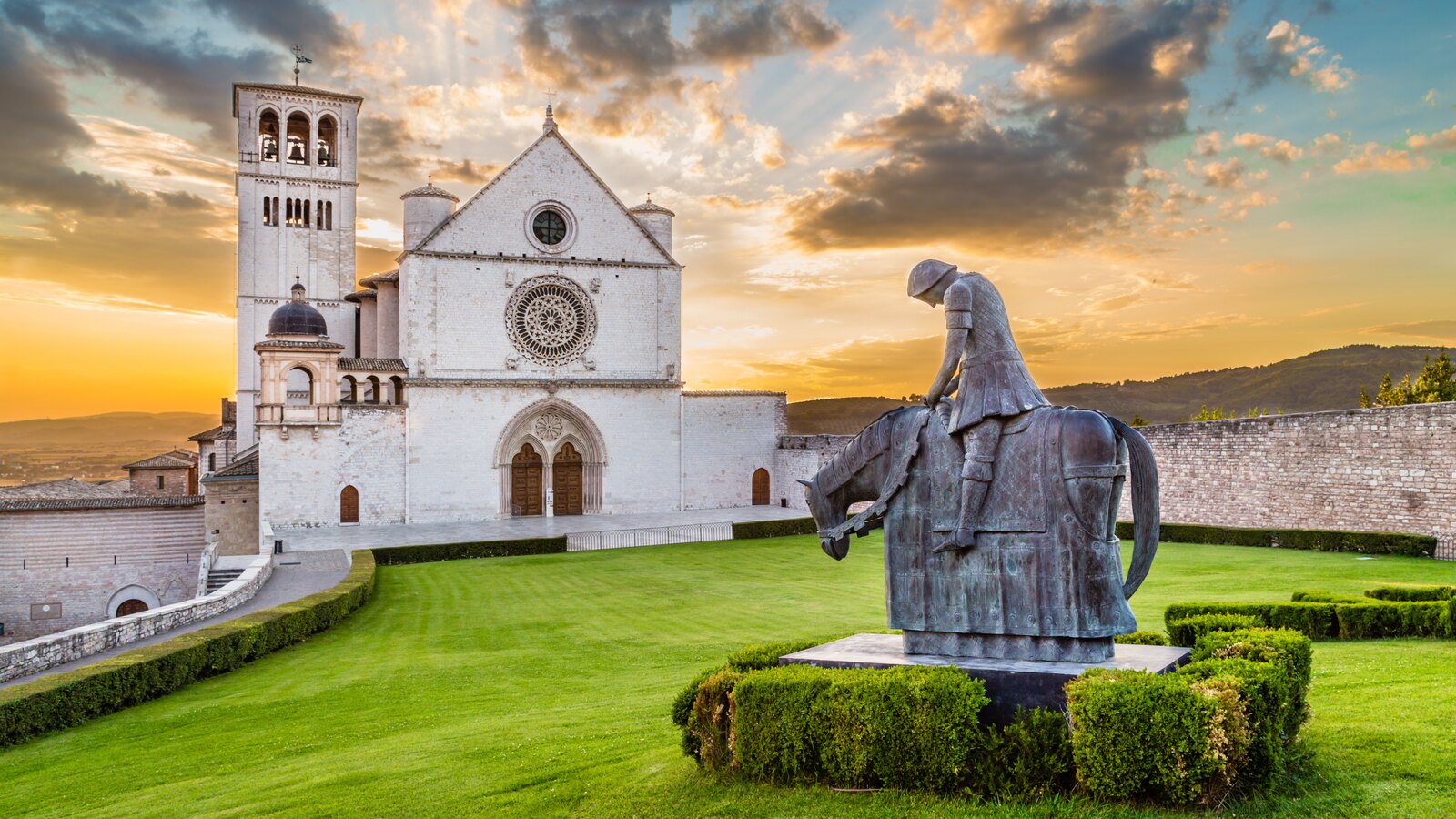
Assisi, rose-pink in the Umbrian light, is one of the supreme pilgrimage cities of the world and rewards far more than a single afternoon. Its crown is the Basilica of St Francis, built in two churches one above the other from 1228: the Upper Basilica holds the famous cycle of frescoes on the life of Francis long attributed to Giotto, among the founding works of Western painting, while beneath the Lower Basilica, in a plain stone crypt, lies his tomb. From there the town unfolds into the places of his life: San Damiano, where the crucifix spoke and Clare later lived; the Basilica of Santa Chiara, which holds the body of Clare herself; and, down on the plain, the great domed church of Santa Maria degli Angeli, built to enclose and protect the tiny Porziuncola where the order was born and Francis died. A short walk away, in the lower town, is the Sanctuary of the Spoliation, with the tomb of Carlo Acutis — so that one visit can hold a medieval saint and a millennial one within the same walls. For a church group or a family tracing the roots of the faith through Italy, Assisi is less a stop than a summation, and precisely the kind of layered, connected journey we are built to design.
Whether you are a pastor planning a trip for your congregation or a family travelling on your own, we build journeys through Christian Italy around understanding — so that a city like Assisi becomes the whole living story of St Francis, not just a beautiful hill town. Tell us about your trip and we’ll start planning it with you.
Plan your pilgrimage →Common questions
An Italian friar (c. 1181–1226), the son of a wealthy cloth merchant of Assisi, who renounced his family’s riches to live in total poverty. He founded the Franciscan order, received the stigmata, wrote the Canticle of the Creatures, and is the principal patron saint of Italy and the patron of ecology.
For giving up great wealth to embrace poverty, founding the Franciscans and (with St Clare) the Poor Clares, his love of nature and the Canticle of the Creatures, creating the first living Christmas nativity scene at Greccio in 1223, and being the first person recorded to bear the stigmata.
By the accounts of those around him, in September 1224 on Mount La Verna he received the wounds of Christ’s crucifixion — in his hands, feet and side — after a vision of a seraph. He is the first recorded stigmatic in Christian history and bore the wounds, in pain, until his death two years later.
In the Basilica of St Francis in Assisi, in Umbria, where his tomb lies in a stone crypt beneath the Lower Basilica. The basilica’s two churches, begun in 1228, hold celebrated frescoes of his life long attributed to Giotto, and the town is one of the great pilgrimage destinations of the world.
His feast is 4 October, the day after he died in 1226. He was canonised in 1228, named principal patron saint of Italy in 1939 (with St Catherine of Siena) and patron of ecology in 1979; in 2013 the first Pope Francis took his name, signalling a papacy of simplicity and care for the poor and the earth.
The Basilica of St Francis with his tomb and Giotto frescoes; San Damiano, where the crucifix spoke to him; the Basilica of Santa Chiara, holding St Clare; the Porziuncola, the chapel where his order began, inside Santa Maria degli Angeli; and the nearby Sanctuary of the Spoliation, with the tomb of Carlo Acutis.